Odoo vs. Bitrix24: Which One Is Better?

In the world of ERP and CRM systems, two platforms stand out for their popularity and modular approach: Odoo and Bitrix24. Both solutions offer tools for sales, customer management, process automation, and business collaboration. But which one is the best fit for your business?
In this comparison, we explain the key differences between Odoo and Bitrix24, their advantages and limitations, and which is the best option depending on your type of business. We’ll also show you how Dynapps, as an Odoo Gold Partner, can help you implement the ideal solution with confidence.
1. What is Odoo, and what is Bitrix24?
Odoo
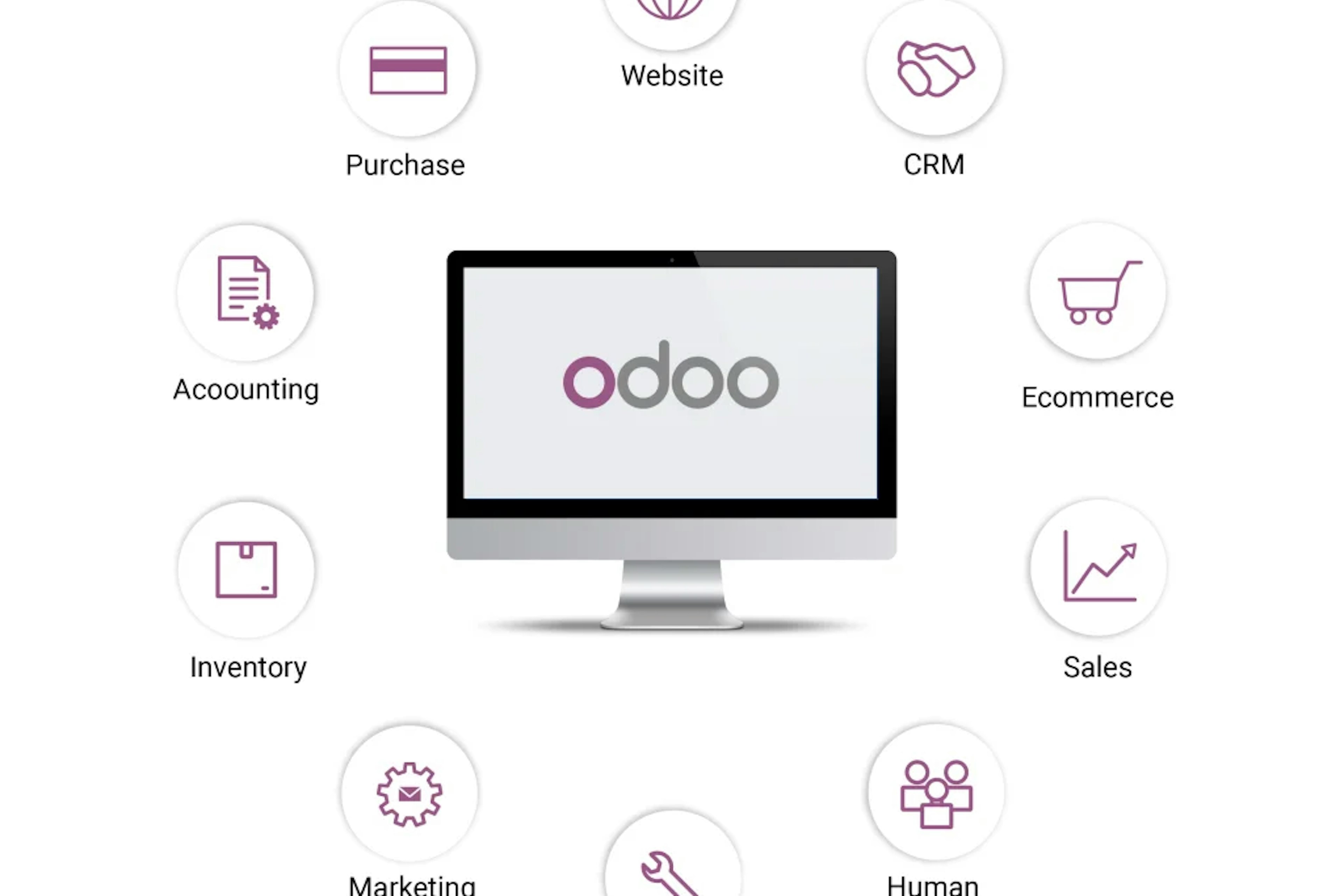
Odoo is a comprehensive, modular ERP system that covers all areas of business management: CRM, accounting, sales, purchasing, manufacturing, inventory, HR, e-commerce, and more. It is available in Community (free) and Enterprise (paid) versions and can be installed on-premises, in the cloud, or on platforms such as Odoo.sh.
Bitrix24
Bitrix24 is a platform primarily focused on CRM, internal communication, task management, and sales automation. It offers a limited free version and paid plans available in the cloud or as self-hosted solutions. Although it includes administrative tools, its main focus is on collaboration and customer management. Given this focus, Odoo Verifactu It offers a comprehensive solution for complying with digital invoicing regulations in Spain, integrating business management with the legal requirements of the Spanish Tax Agency (AEAT).
2. Licenses and Pricing
Odoo
Community: Free, with no user limit.
Enterprise: Starting at €31.10 per user per month, with all apps included.
Flexible hosting: SaaS, on-premises, Odoo.sh, or public clouds.
Bitrix24
Free version: up to 5 users, basic features.
Cloud plans: from €49/month to over €199/month, depending on the number of users and features.
Local hosting is available only on Enterprise plans.
Odoo offers greater flexibility in licensing models, scalable growth, and unrestricted use starting with the free version.
3. Ease of use and interface
Bitrix24 has a modern interface, though it’s a bit cluttered with options, which can be confusing for new users. It’s heavily focused on tasks, chat, and CRM, with all features accessible from a single dashboard.
Odoo features a clean, visual interface that is consistent across all modules. Its Kanban, Gantt, and calendar views make workflows intuitive, especially in business or logistics processes.
4. Scalability and performance
Odoo can scale both horizontally and vertically thanks to its modular architecture. It can be used by organizations ranging from micro-businesses to multinational corporations with multiple databases and customized environments.
Although Bitrix24 is scalable in its Enterprise edition, it does not offer the same level of control or in-depth customization. Most users are limited to its cloud environment.
5. Customization and Development
Because Odoo is open source, it offers complete customization. You can modify fields, views, workflows, and automations, and create new modules from scratch with the help of developers or certified partners.
Bitrix24 allows for certain customizations through its visual builder and simple automations, but it does not allow users to modify its core, which limits long-term flexibility.
6. Ideal use cases
Odoo is ideal for:
Companies that need a comprehensive, customized ERP system.
Industrial, logistics, e-commerce, and professional services sectors.
Businesses with customized processes or those expanding internationally.
Companies looking to consolidate everything onto a single platform.
Bitrix24 is ideal for:
Small teams focused on CRM and internal communication.
Digital agencies, sales agencies, customer service.
Companies that don't need a full-featured ERP system, but do need real-time collaboration.
7. Advantages and disadvantages
Benefits of Odoo
Modular ERP with comprehensive coverage.
Unlimited customization.
Flexible hosting: cloud, on-premises, Odoo.sh.
Community and global ecosystem.
Continuous product development.
Disadvantages of Odoo
It requires training and a partner to get the most out of it.
A steeper initial learning curve in large-scale implementations.
Benefits of Bitrix24
User-friendly CRM.
A great system for tasks, chat, and collaborative work.
Free plan with useful features.
Disadvantages of Bitrix24
It's not an ERP.
Limited customization.
Not suitable for companies with complex processes or specific integration needs.
8. Implement Odoo with Dynapps
If you're considering Odoo as an alternative, Dynapps can help you with:
Consulting services to define processes.
Module configuration and installation.
Custom development and third-party integrations.
Ongoing training and technical support.
As an Odoo Gold Partner, Dynapps has helped dozens of companies modernize their operations and streamline their management with Odoo.
Conclusion
Odoo and Bitrix24 both offer business management tools, but with different approaches. Bitrix24 focuses on collaboration and CRM for small businesses, while Odoo provides a robust, scalable, and fully customizable ERP platform.
If you're looking for a comprehensive tool to support your business's growth and adapt to your processes, Odoo is the most complete option in 2025. And with Dynapps, you can be sure of a professional, flexible, and success-oriented implementation.
Discover what Odoo can do for your business.
An initial meeting to see if we're a good fit, followed by a demonstration tailored to your processes.
More posts like this

Odoo Consultants
Odoo Consultants
At Dynapps, we’ve been working as Odoo consultants in Spain since before we wrote the first line of configuration code: we understand your business, prioritize what truly adds value, and only then do we design the solution.
Dynapps Digital Kit
Dynapps Digital Kit
Digitize Your Business with Dynapps

Odoo in Valencia
Digitize Your Odoo in Valencia

8-minute read
Verifactu 2027: The Law That Never Comes... Until It Does
8-minute read
Odoo 20: All the New Features and the 2026 Release Date

4 min read
Dynapps named Best Odoo Partner in Europe
At the Odoo Experience Days in Brussels, Dynapps won the title of Best Odoo Implementation Partner in Europe, with former CEO Karel Hendrickx and the team collecting the award on 2–4 October 2024.
4 min read
ERP vs CRM: what is the difference?
In a competitive market, businesses lean on software to operate efficiently. Two systems come up most: ERP and CRM. They serve different purposes, and they often work better together than apart.
6 min read
Odoo or Exact: which ERP fits your SME?
Choosing an ERP changes how the business runs. Odoo and Exact both target SMEs, but they solve different problems. This is a side-by-side read on functionality, flexibility, support, and where each one fits.
4 min read
Odoo vs AFAS: comparing two ERP systems built for SMEs in NL and BE
A side-by-side comparison of Odoo and AFAS, two ERP systems built for SMEs in the Netherlands and Belgium. It weighs flexibility, user-friendliness, support, integrations and cost per system.
June 10, 2026 - 3-minute read
10 Tips for Improving Your Productivity in Odoo