Odoo and PHP: Why Critical PHP Vulnerabilities Don't Affect Your Odoo.
Odoo does not run on PHP. The two critical vulnerabilities that PHP fixed on October 21, 2026, put millions of websites at risk—but not your Odoo. We'll explain what happened and what you need to check.

Odoo does not run on PHP. That is why the two critical vulnerabilities that PHP fixed on October 21, 2026, do not affect your Odoo, even though they put millions of websites at risk and forced some organizations to take their sites offline as a precaution.
If your company uses Odoo, the short answer is this: your Odoo environments were not compromised. If you also have websites or applications written in PHP, here's what happened and what you should check.
Odoo does not use PHP in any part of its operation.
A PHP error has no way of affecting your ERP—not in accounting, not in the warehouse, and not in the Odoo online store. When the alert went off, our Odoo customers didn't have to do anything. They didn't have to disconnect anything either.
Confusion between Odoo and PHP is common because many ERP systems, online stores, and content management systems are built using PHP. Odoo is not one of them.
The error is in PHP, not in a plugin.
PHP is the language that powers most websites: WordPress, WooCommerce, Magento, Drupal, and thousands of custom applications. When a plugin fails, that plugin is fixed. This time, it was the foundation on which everything else rests that failed.
The two vulnerabilities (CVE-2026-109618 and CVE-2026-109619) are rated 9.2 out of 10 in severity. In practice, this means three things:
All it takes is one request. The attacker doesn't need a username or password. All they have to do is send a specially crafted request to your website.
It doesn't matter how well-designed your website is. The attack is executed before the application code starts running, so even the best development practices can't stop it.
The attacker is in control of the server. They can do whatever they want: steal data, install malware, or use your computer to attack others.
The vulnerability has been there for 14 years, since PHP 5.4 (2012), and affects the default settings. All common ways of serving PHP are vulnerable, and Apache with mod_php is the most at risk.
The solution is to update to PHP 8.5.12, 8.4.27, 8.3.36, or 8.2.35. PHP 8.1 and earlier versions are no longer supported, so they will never receive an official patch.
From a private report to a PHP patch—in three days.
August: The researchers from Calif and Wiz privately notify PHP.
October 20: Details are leaked ahead of schedule, watchTowr confirms they're real, and PHP publishes the story early.
October 21, 9:43 a.m.: Cloudflare detects the first attacks hours before any patch is available.
October 21, 3:30 p.m.: PHP releases the fixed versions.
All times are in peninsular time. CERT-EU, the UK NCSC, and the Dutch NCSC issued alerts that same day. CERT-EU's advice was clear: patch immediately or take the system offline if that is not possible.
Millions of PHP websites are vulnerable, and many cannot be patched.
PHP powers about 70% of websites whose server-side language is known. The vulnerability affects WordPress, WooCommerce, Magento, Shopware, Drupal, Joomla, Nextcloud, phpMyAdmin, Laravel, and Symfony.
An estimate based on Shodan puts the number of servers openly exposing PHP on the internet at about 2.2 million. About 884,000 of them are running versions that will never be patched, and another 740,000 hide their version.
In the Netherlands, Tweakers and the NCSC itself took their websites offline as a precaution. Public proof-of-concepts are already circulating, watchTowr is detecting active exploitation attempts, and Magento has a confirmed exploit. E-commerce is the hot spot: Sansec expects widespread exploitation now that the patch and technical analyses are public.
Odoo and PHP in the Same Company: Where There Is a Risk.
Your Odoo is secure, but the systems around it may not be. If you have a WordPress website, a WooCommerce or Magento store, or any PHP application running alongside your Odoo, those components are vulnerable. Check them today:
Take inventory. Corporate website, online store, intranet, document management system, internal tools: make a note of everything that runs on PHP.
Check the version. You need PHP 8.5.12, 8.4.27, 8.3.36, or 8.2.35 or later. If you're running 8.1 or earlier, there's no patch: you'll have to upgrade.
Ask whoever takes care of it. And ask for an hour, not a promise.
A certificate does not respond to an alert. A team does.
Dynapps is ISO 27001 certified. This certification attests to our commitment to robust security processes. In practice, it means that as soon as an alert is triggered, we know which part of each system is compromised and take action that very same day.
If you work with Odoo, this PHP bug does not affect you.
Discover what Odoo can do for your business.
An initial meeting to see if we're a good fit and a demonstration tailored to your processes.
More posts like this
5 min read
AI in Odoo for SMEs: what already works, with real cases.
What AI can do in your Odoo today, the Prima Protección case, the two ways to connect it (Claude via MCP and the Odoo 20 agents) and how to start in your company.
7 min read
Connecting Claude to Odoo: the MCP connector we use every day.
What MCP is, how we connect Claude to your Odoo with our own connector, what your team can do with it from day one, and how it fits with the MCP in Odoo 20.
12 min read
What's new in AI in Odoo 20: agents that act and ask permission.
A summary of the AI talk at Odoo Experience 2026: the Odoo AI agent, app-specific agents, self-update, IAP credits and Odoo as an MCP server, plus what we found in the version 20 code.

Odoo Pricing in Spain
Odoo Pricing in Spain
Licenses, implementation, and how to finance it.

Odoo Partners Near You: Valencia · Murcia · Alicante · Barcelona · Madrid
Odoo Partners Near You: Valencia · Murcia · Alicante · Barcelona · Madrid
Odoo Implementation, Consulting, and Support for Companies in Spain
8-minute read
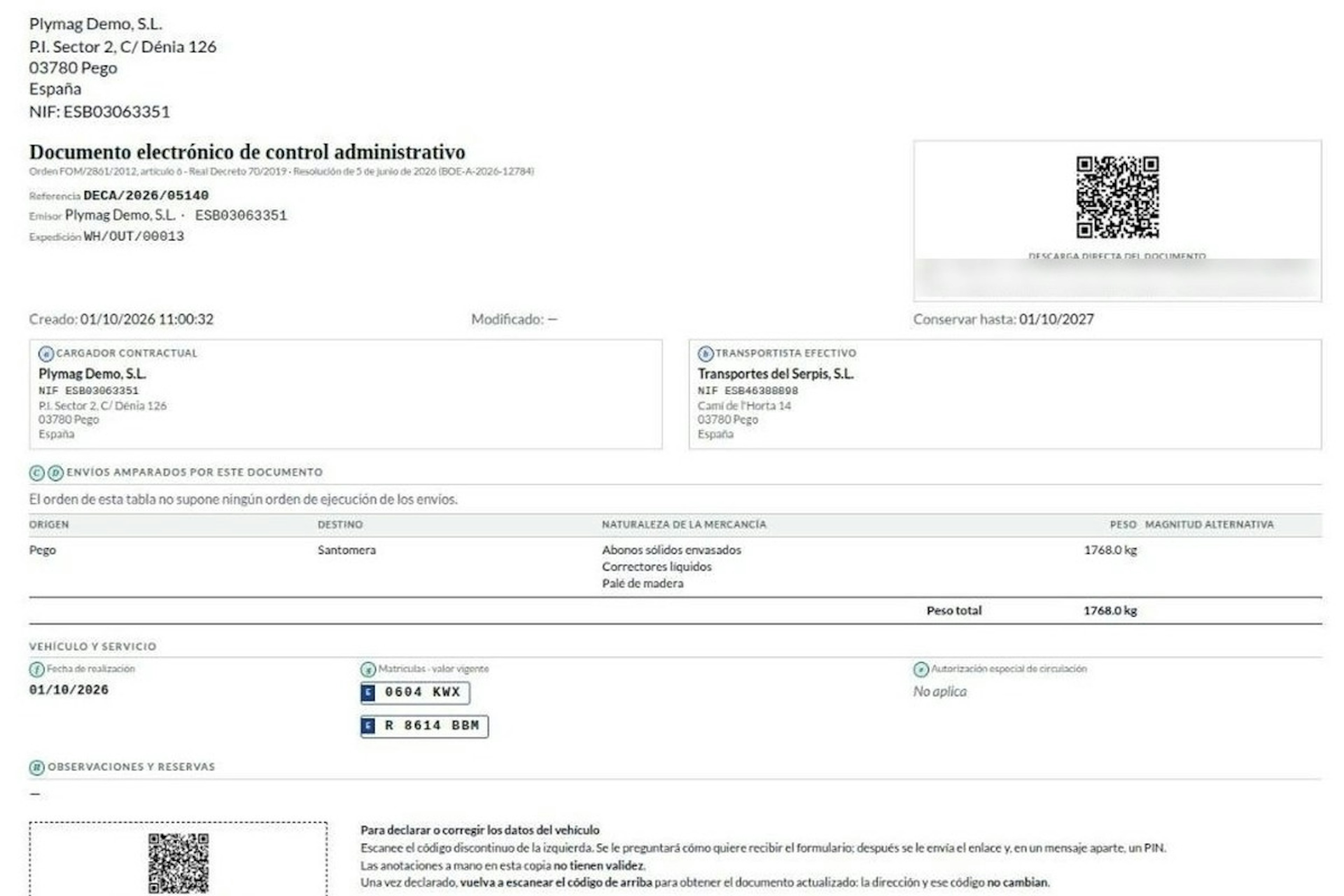
How the DeCA works in Odoo when the truck changes on the road: QR, secure link and PIN.
A breakdown, a different semi-trailer, a reservation about the load: this is how the DeCA is amended in Odoo during transport, with two QR codes, a link only the carrier receives and a six-digit PIN.
8-minute read
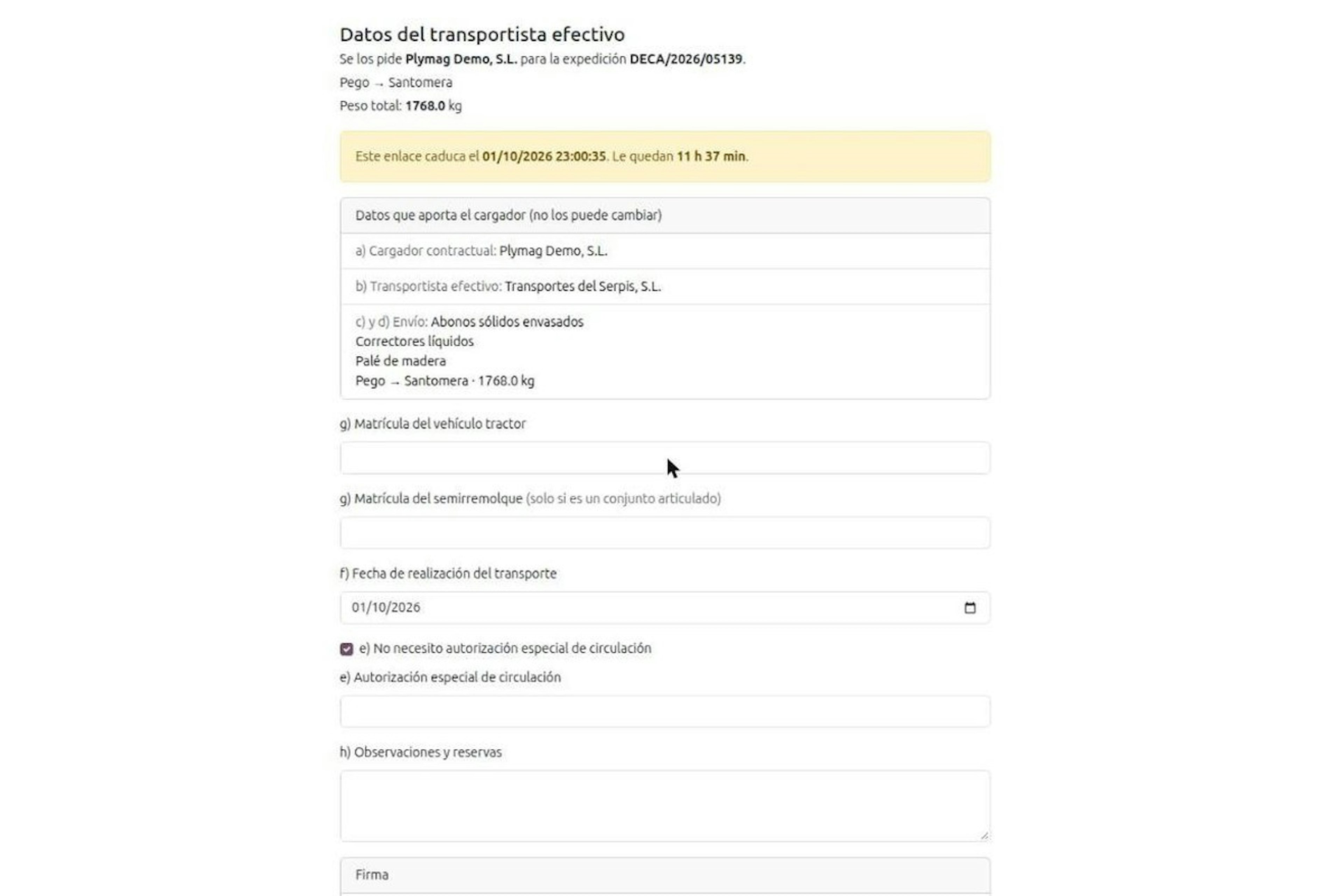
DeCA for transport companies with Odoo: you supply your data by link and issue it when you subcontract.
As the actual carrier, the DeCA binds you, but you will usually supply the special authorisation, date and plates through the link your client's Odoo sends you. When you subcontract, you will normally issue it from your own Odoo.
13-minute read
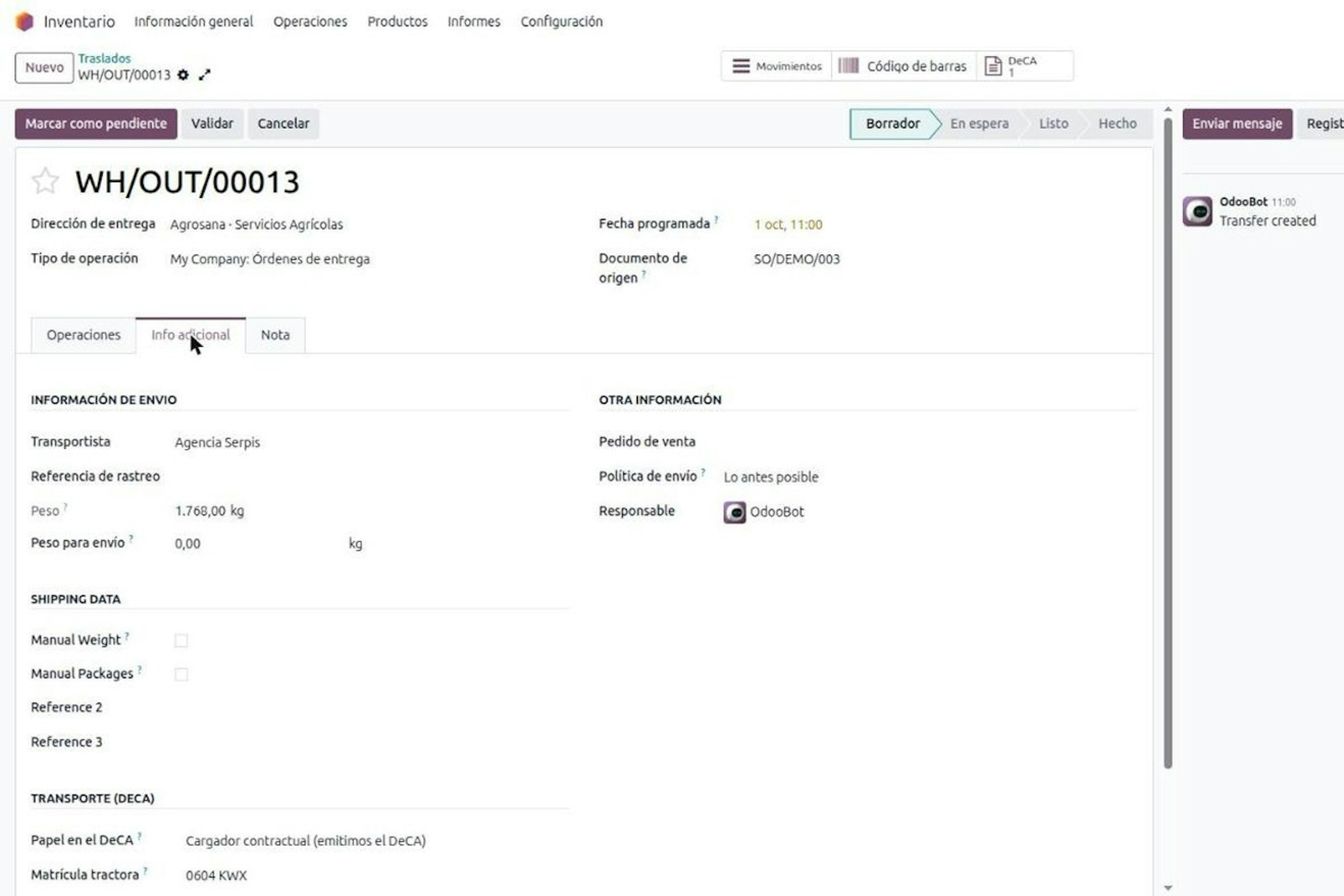
DeCA in Odoo: the transport control document, issued from the delivery order.
The DeCA is mandatory from 5 October 2026. If you run Odoo, you issue it from the delivery order with no separate tool, and the carrier adds the plate from their phone.
8-minute read
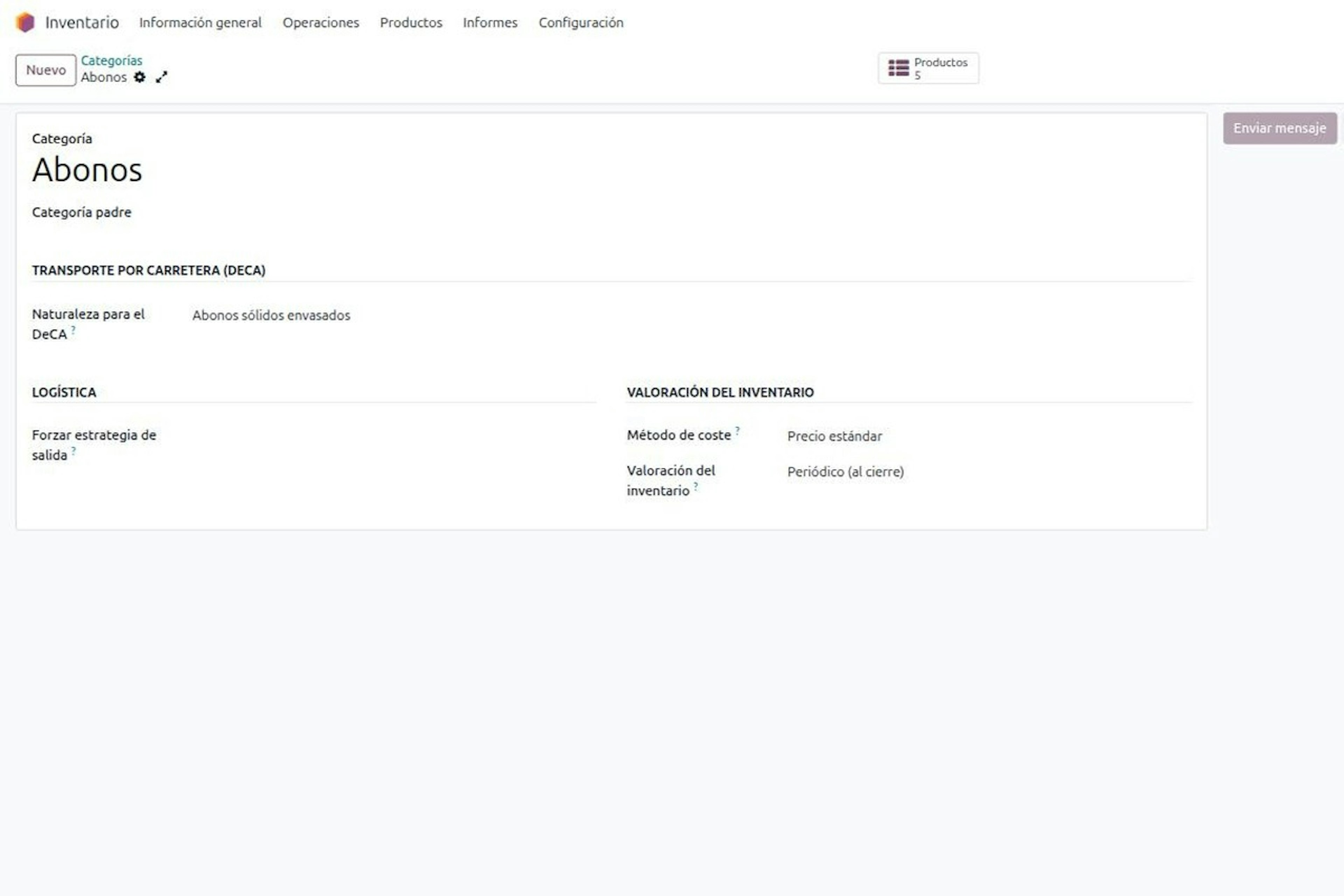
DeCA in Odoo for distribution companies: comply even without trucks.
If you distribute with Odoo and contract the transport, the DeCA binds you even if you own no truck, and you will usually be the one issuing it. What data you supply, why it is already on your delivery order and what daily work looks like.
8-minute read
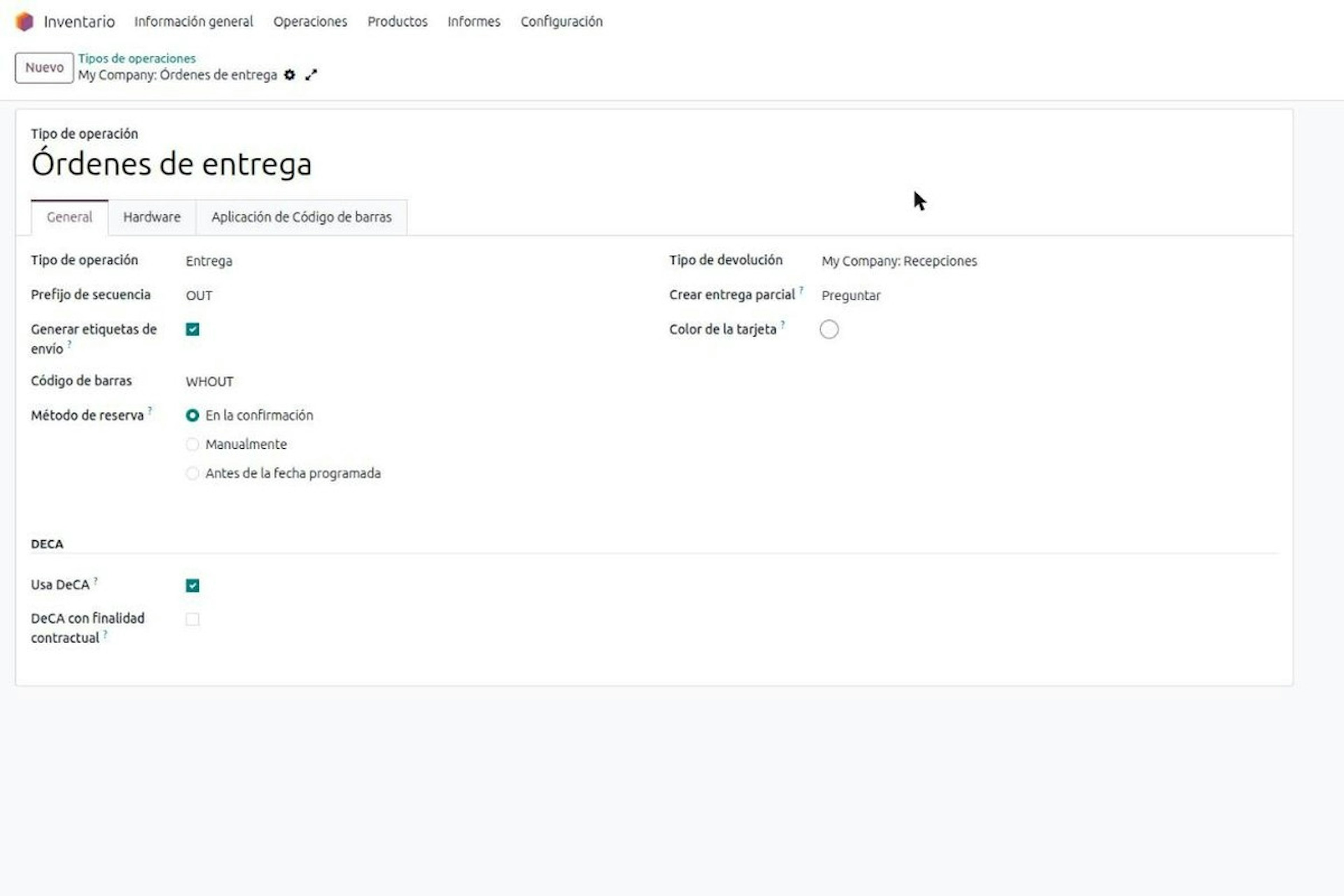
Who must issue the DeCA: both parties, and in Odoo you decide it on each delivery order.
The DeCA binds both the contractual shipper and the actual carrier, even if you own no trucks. Five questions to find out which one you are and how it shows on each Odoo delivery order.