What is Odoo OCA and how does it work?

What is Odoo OCA, and what role does it play in the community?
In an environment where the digital transformation of small and medium-sized businesses is essential, there is a growing need for tools that enable greater efficiency, process automation, and real-time, informed decision-making. This is where Odoo comes in, one of the most powerful and flexible ERPs on the market today. However, within this ecosystem, there is a key collaborative community: Odoo OCA (Odoo Community Association).
This ecosystem of developers and committed companies makes it possible to expand the ERP's functionality without relying solely on the Enterprise version. This allows you to access robust, scalable solutions tailored to your processes. In this article, Dynapps as Odoo Gold Partner, we'll explain what Odoo OCA is, how it works, and how you can get the most out of this technology.
Odoo OCA, the Odoo Community Association, is a cornerstone of the Odoo ecosystem. It enables developers, businesses, and users to collaborate on the creation and continuous improvement of modules and applications. Its work drives innovation, expands the ERP’s capabilities, and fosters a collaborative environment in which each member contributes valuable knowledge for the common good. Verifactu in Odoo, these improvements can be directly aligned with Spanish tax regulations, ensuring legal compliance while taking advantage of the benefits offered by the OCA community.
Meaning of OCA (Odoo Community Association)
The Odoo Community Association (OCA) is a nonprofit organization whose primary goal is to support the collaborative development of Odoo and promote the use of its open-source version (Community Edition). It was founded to strengthen the Odoo open-source community, ensuring a stable, sustainable ecosystem aligned with the interests of users, integrators, and independent developers.
OCA's Goals and Values
The OCA has a clear mission: to build a collaborative, professional, and high-quality ERP environment that is accessible to everyone. Its values are centered on:p
Collaboration: To foster an environment where developers from around the world can share their knowledge and work together to improve the platform.
Open innovation: To promote the development of modules that meet real market demands without commercial restrictions, enabling the ERP system to evolve continuously.
Transparency and open access: Ensure that the tools developed are available free of charge to the entire community, helping even small businesses make the most of Odoo technology.
Differences between Odoo OCA and Official Odoo (Enterprise vs. Community)
You already know What is Odoo?, you might be wondering if Odoo OCA and the official Odoo are the same thing. To distinguish between them, it’s worth noting that the official version, often referred to as Odoo Enterprise is a proprietary solution which offers premium services, official support, and exclusive features for customers who need a robust solution backed by professional support. On the other hand, Odoo OCA focuses on the Community version, offering free and open-source modules.
Although both solutions are based on the same foundation, Odoo OCA offers greater customization and flexibility without license fees. This is appealing to companies looking to adapt the system to specific processes without incurring high costs. The OCA provides users with an opportunity to implement advanced solutions through collaboration and the exchange of ideas in an environment of continuous innovation.
Odoo OCA Apps: Free and Collaborative Modules
It's no secret that the Odoo modules They tend to be quite diverse and are integrated as needed to meet the business’s requirements. OCA modules are based on collaboratively developed applications and can be used according to the company’s needs.
Benefits of using OCA apps in Odoo Community projects
Some of the benefits of using OCA apps In Odoo Community projects, these can be summarized as follows:
Value for money: Since these are free, open-source modules, companies can implement advanced solutions without the need for costly custom development.
Flexibility and adaptability: The collaborative nature of open source software allows any module to be modified and adapted to specific processes, integrating with other systems.
Active community: Ongoing community participation ensures regular updates, security patches, and collective support, which contributes to greater stability and the system's evolution over time.
Constant innovation: Developers and community experts drive improvements tailored to market needs, enabling the platform to remain at the forefront of ERP technology.
Where can I find the OCA modules?
Most of the modules developed by the OCA are hosted on public GitHub repositories: https://github.com/oca. On this website, you can explore, download, and contribute to the projects. Each module is organized by functionality—such as accounting or CRM—and can be cloned, downloaded, or customized to meet the needs of each company.
In addition, The community maintains documentation and discussion forums. It features updates, security advisories, and installation tutorials, making it easier to integrate these modules into any Odoo project.
Most commonly used types of apps (invoicing, accounting, CRM)
The OCA modules cover a wide range of applications. Some of the most popular include:
Billing and Accounting: Tools that enable you to manage accounts, invoices, and bank reconciliations, integrating seamlessly with the ERP's general ledger.
Verifactu Odoo In addition, we ensure that these processes comply with Spanish tax regulations regarding digital invoicing.
CRM and Sales: Extensions that streamline customer management, sales opportunity tracking, and marketing task automation.
Inventory management: Solutions for inventory control, order tracking, and warehouse management.
Human Resources: Modules that streamline employee management, absence tracking, schedule planning, and training.
Projects and tasks: Applications that help manage projects, assign tasks, and track progress, enabling seamless coordination between teams
This methodology eliminates the need for on-premises installation or server configuration. This allows any user to explore and test new modules and developments without compromising real data.

Odoo OCA Repositories on GitHub
The OCA's GitHub repository is an inexhaustible source of resources and knowledge. It contains thousands of lines of code, documentation, tests, and tools that enable users and developers to continuously improve the Odoo solution.
Structure and Organization of Repos
The OCA repositories are organized in a modular and meticulous manner. They are generally divided into folders based on functionality or area of application: from modules for sales management to specific tools for human resources and accounting. For example, account-financial-tools, crm, project.
Each repository includes detailed documentation, configuration files, automation scripts, and, in many cases, practical examples to facilitate the installation and use of each module. This allows any user to easily explore and contribute improvements, fostering transparency and collaboration in every project.
Best practices for collaborating with the OCA community
To contribute to Odoo OCA, it is necessary to follow best practices that ensure the ERP is strengthened. Some recommendations include:
Code review: Before uploading any contribution, it is important to conduct thorough testing and have the code reviewed internally to ensure quality.
Required documentation: Each module must be accompanied by clear and detailed documentation explaining both its use and the installation and configuration process.
Active communication: Participating in forums, discussion groups, and community meetings helps align the project's vision and address questions in a timely manner.
How to contribute to OCA modules if you're a developer
If you are a developer or an implementation company, you can help by creating new modules, fixing existing bugs or issues, and submitting improvements and even participate in code reviews for other members. Every contribution goes through a technical validation process to ensure code quality. It is essential to follow the coding guidelines and standards established by the OCA, which ensures that updates maintain the quality and consistency of the code.
Why use OCA modules in your Odoo projects?
If you're looking for a versatile and dynamic solution, choosing OCA modules for your Odoo Community project is an ideal choice. It's backed by a global community of experts, which translates into a wide range of benefits.
Greater flexibility and customization
The OCA modules are designed according to the open-source model, which means you can freely modify and adapt them to your business’s unique requirements. This flexibility allows customize features, integrate new workflows at work and respond immediately to changes in the business environment. When you customize at this level, the ERP system becomes a natural extension of internal processes, offering a competitive advantage in a market where agility is vital.
Security, maintenance, and an active community
The Digital Transformation with Odoo requires security, maintenance, and communication, and that is exactly what OCA modules. These are subject to constant security reviews and updates by developers around the world. This collaborative approach ensures that bugs are identified and fixed quickly, while new features are adopted in an orderly and systematic manner.
Ideal for companies that use Odoo Community Edition
If your company has chosen to use Odoo Community Edition, the OCA modules are the perfect solution. Without the licensing costs associated with the Enterprise version, organizations can take advantage of extensive customization capabilities without sacrificing quality or stability. This is ideal as an ERP for SMEs or e-commerce for small businesses that want to stay competitive without incurring high expenses.
Step-by-Step Guide to Installing OCA Modules in Odoo
To get the most out of the Odoo OCA modules, it is essential to understand the installation process. The procedure may seem simple, but for many people it is a complex system. If you want greater peace of mind, request the Odoo demo.
Clone the repository from GitHub
For this step, you need to access GitHub, the official OCA repository, and locate the module you want to install. Then, open the terminal and run the following command to clone the repository to your server or local machine:
git clone https://github.com/OCA/oca-addons.git
Next, verify that the folder has downloaded correctly and that it contains all the files for the module.
Add the path to Odoo's addons_path
To continue, Locate and open your instance's configuration file from Odoo, usually named odoo.conf, and modify the addons_path parameter. To do this, add the path to the cloned repository to the list of directories in addons_path. For example:
addons_path=/opt/odoo/addons,/path/to/oca-addons
Now, save and close the file. You need to verify that the path you added is correct so that Odoo can automatically detect the new modules when it restarts.
Enable developer mode and load the modules
For this step, log in to your Odoo instance via your browser, go to the settings menu, and Enable developer moder, which will allow you to view advanced options. From the applications panel, click “Refresh module list,” which will allow Odoo to recognize and integrate the new module. Finally, locate the module in the list of applications, install it, and verify that it works correctly by running tests.
Does the process seem complicated to you? Don't hesitate to contact INDAWS, your trusted partner, and ask about the training process with the Odoo course We're here to help.
Conclusion
The integration and use of modules developed by the Odoo Community Association presents a unique opportunity for businesses of all sizes looking to streamline their processes and successfully tackle today’s technological challenges. Thanks to their work, Odoo Community users can access enterprise-grade solutions without relying on licenses or costly custom development.
The OCA is a nonprofit organization that supports the Odoo Community with open-source modules.
OCA modules allow companies to access advanced features without paying for licenses.
There are hundreds of OCA applications available on GitHub for various areas of business.
Contributing to the OCA is easy and fosters an ecosystem of continuous improvement.
Using OCA in Odoo Community offers flexibility, customization, and scalability.
Discover what Odoo can do for your business.
An initial meeting to see if we're a good fit, followed by a demonstration tailored to your processes.
More posts like this
8-minute read
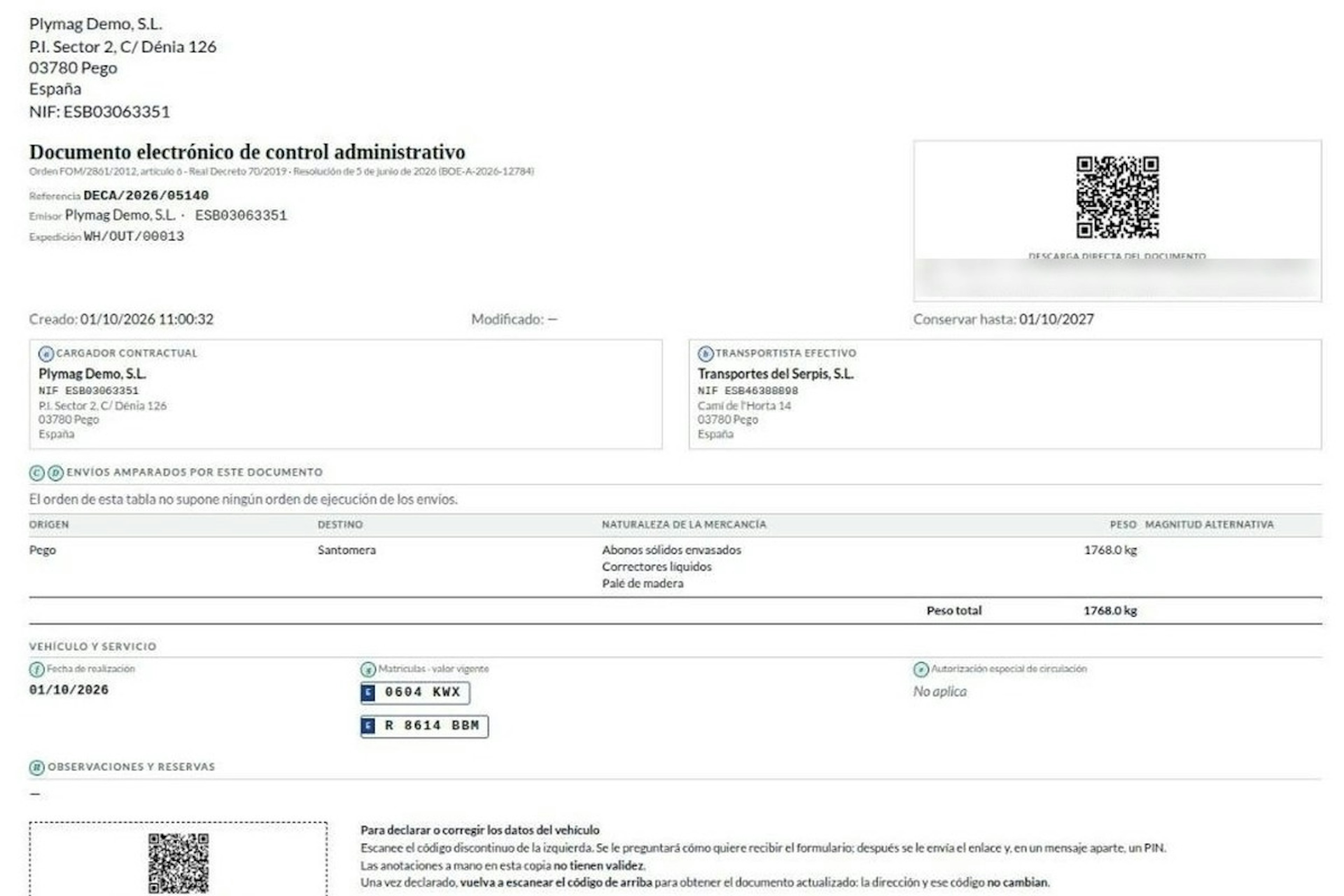
How the DeCA works in Odoo when the truck changes on the road: QR, secure link and PIN.
A breakdown, a different semi-trailer, a reservation about the load: this is how the DeCA is amended in Odoo during transport, with two QR codes, a link only the carrier receives and a six-digit PIN.
8-minute read
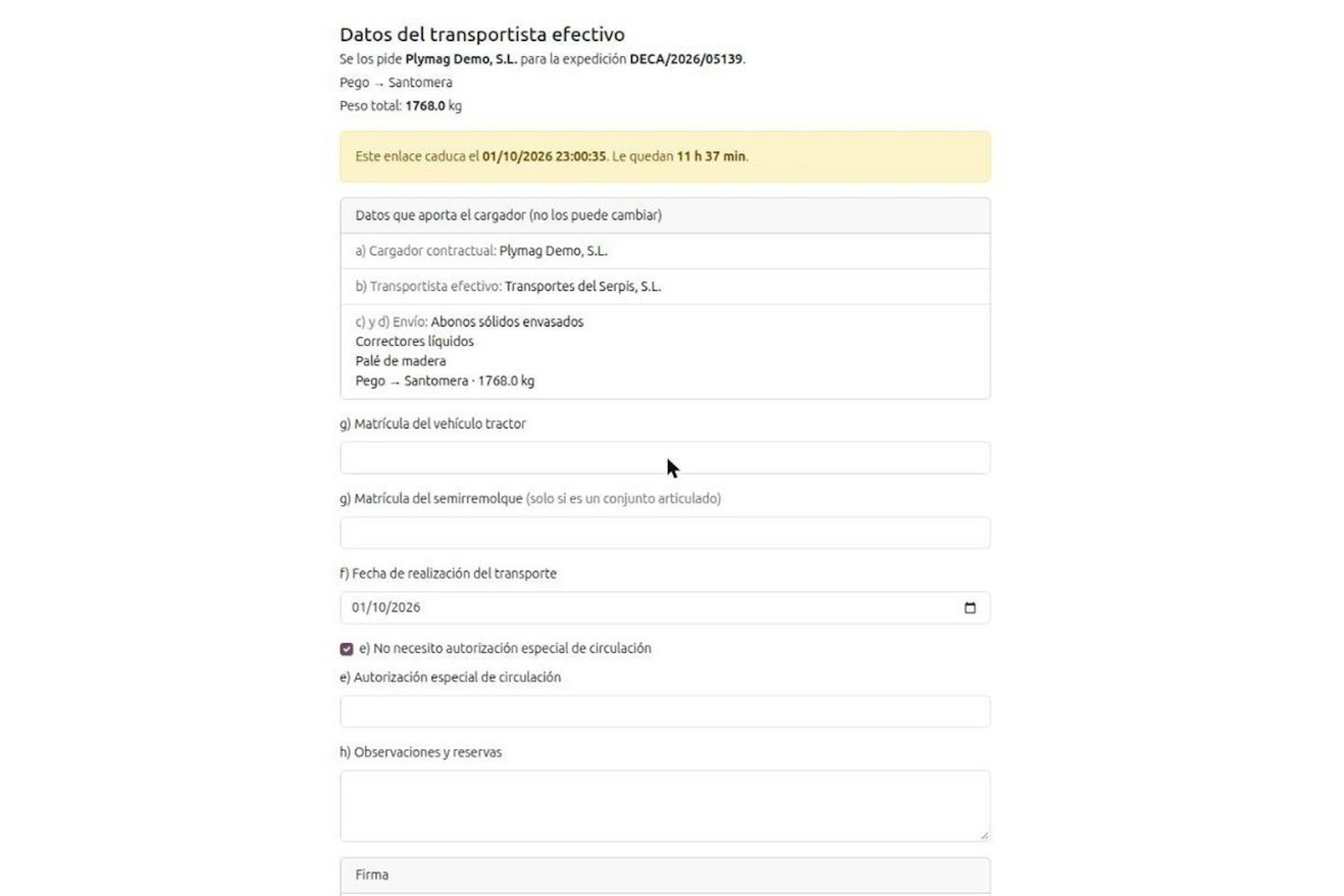
DeCA for transport companies with Odoo: you supply your data by link and issue it when you subcontract.
As the actual carrier, the DeCA binds you, but you will usually supply the special authorisation, date and plates through the link your client's Odoo sends you. When you subcontract, you will normally issue it from your own Odoo.
13-minute read
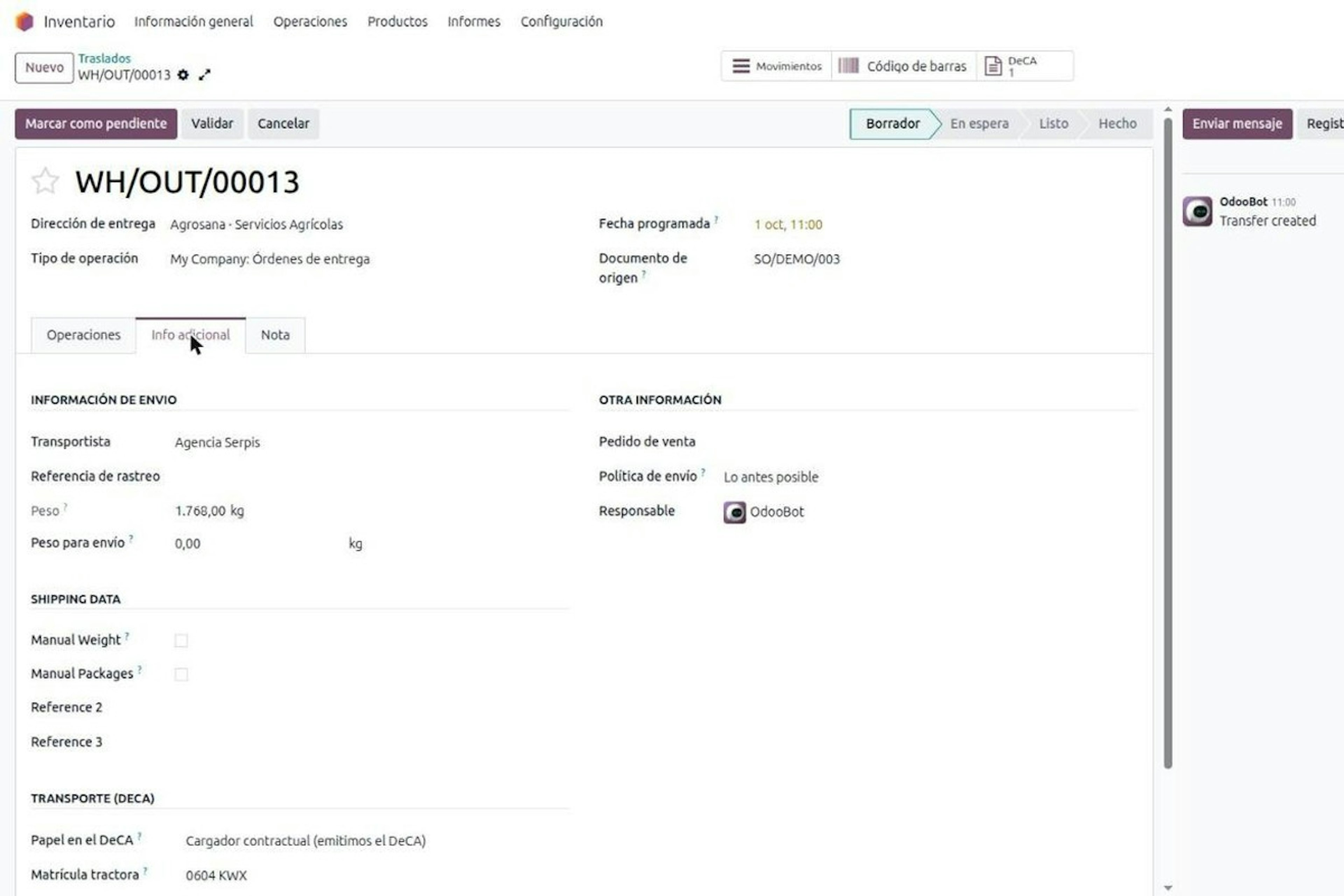
DeCA in Odoo: the transport control document, issued from the delivery order.
The DeCA is mandatory from 5 October 2026. If you run Odoo, you issue it from the delivery order with no separate tool, and the carrier adds the plate from their phone.
8-minute read
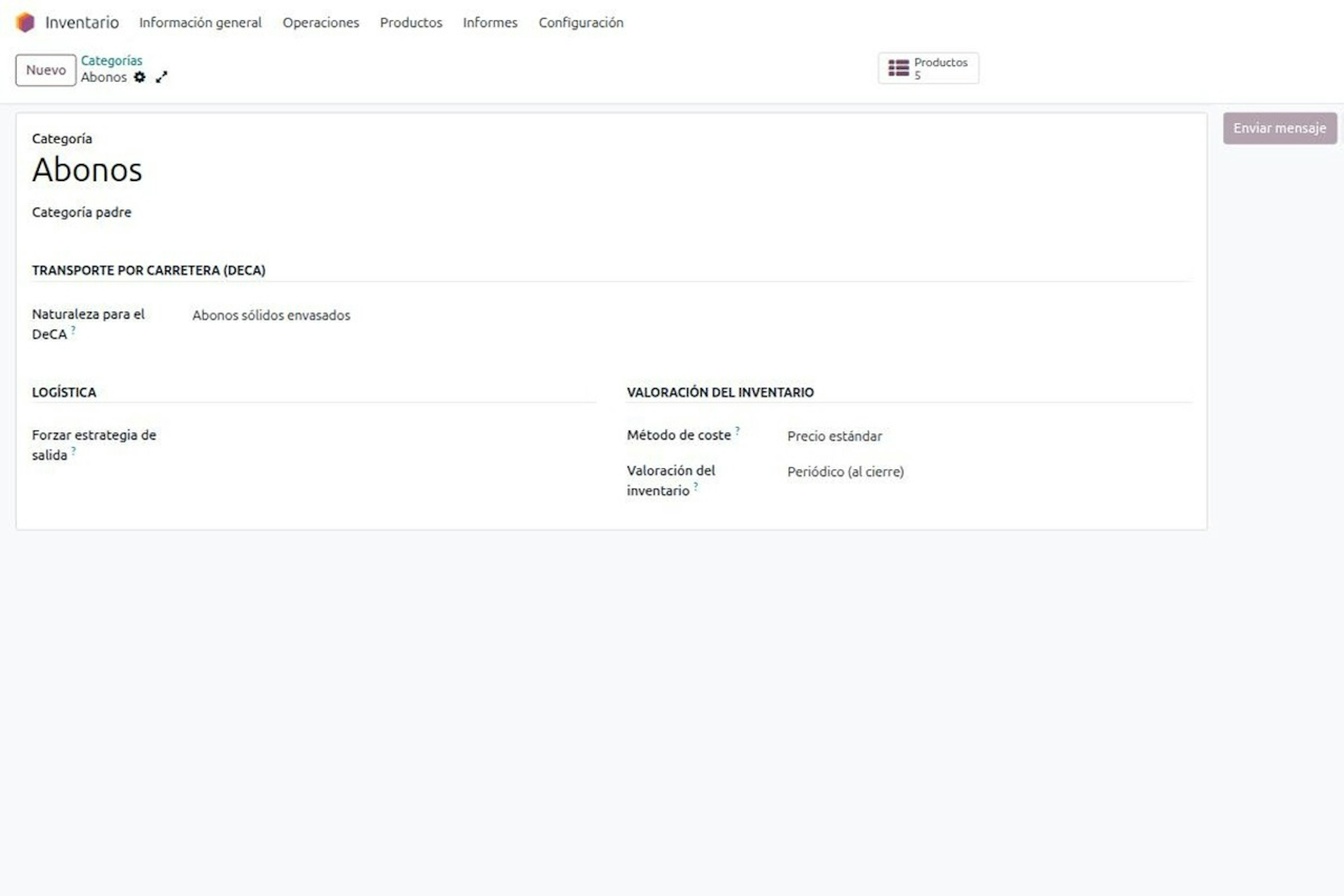
DeCA in Odoo for distribution companies: comply even without trucks.
If you distribute with Odoo and contract the transport, the DeCA binds you even if you own no truck, and you will usually be the one issuing it. What data you supply, why it is already on your delivery order and what daily work looks like.
8-minute read
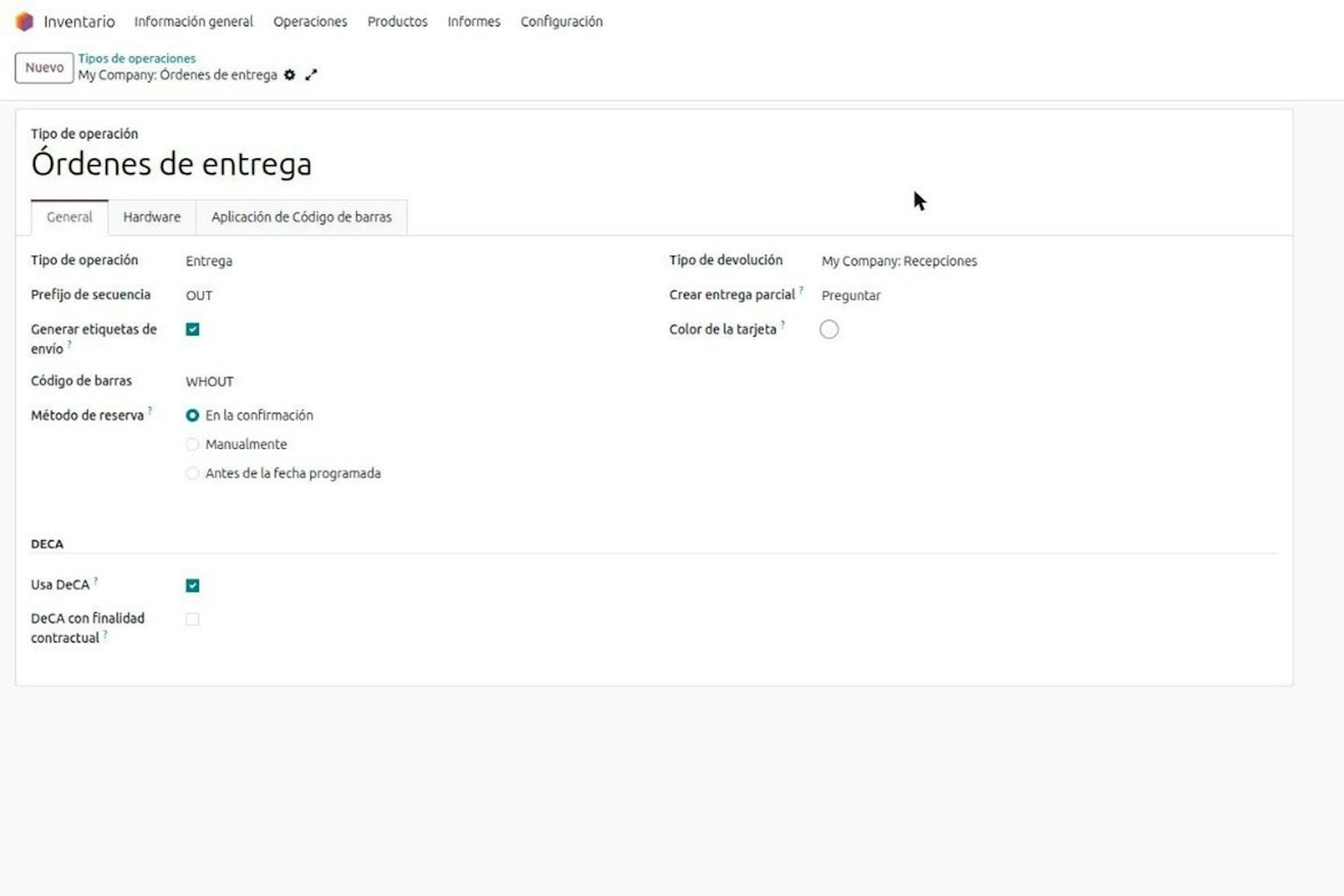
Who must issue the DeCA: both parties, and in Odoo you decide it on each delivery order.
The DeCA binds both the contractual shipper and the actual carrier, even if you own no trucks. Five questions to find out which one you are and how it shows on each Odoo delivery order.

Odoo Partner in Barcelona
Odoo Partner in Barcelona
Odoo Implementation, Consulting, and Support for Businesses in Barcelona

Odoo Partner in Madrid
Odoo Partner in Madrid
Odoo Implementation, Consulting, and Support for Companies in Madrid

Odoo Partner in Alicante
Odoo Partner in Murcia
Odoo Implementation, Consulting, and Support for Businesses in Murcia

Odoo Partner in Murcia
Odoo Partner in Murcia
Odoo Implementation, Consulting, and Support for Businesses in Murcia
Odoo Consultants
Odoo Consultants
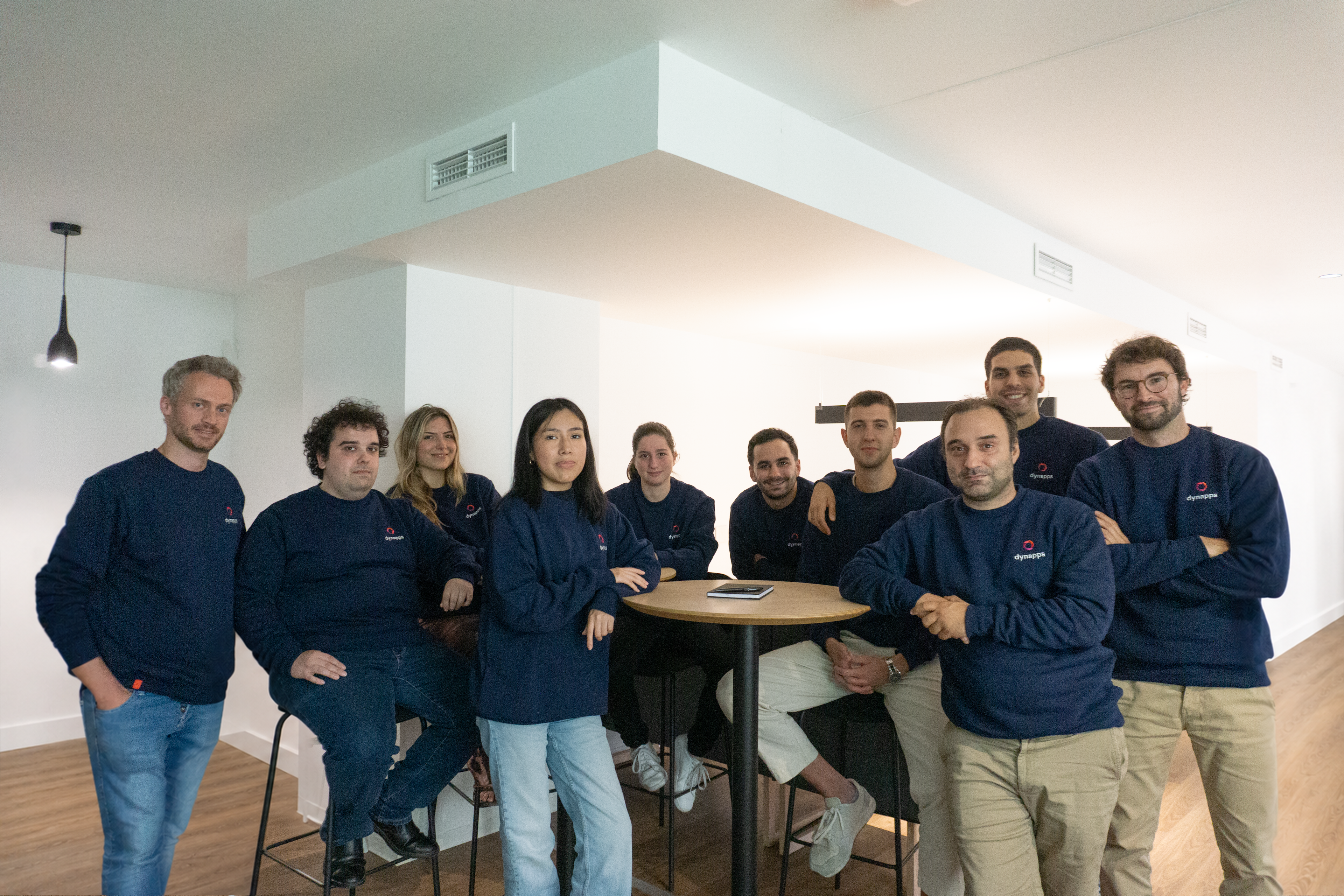
At Dynapps, we’ve been working as Odoo consultants in Spain since before we wrote the first line of configuration code: we understand your business, prioritize what truly adds value, and only then do we design the solution.