What is OpenERP? Benefits

Odoo, formerly known as OpenERP, is an open-source enterprise resource planning (ERP) system that streamlines business processes of all kinds. Since May 2014, this designation has set Odoo apart from other providers. As an Odoo Gold Partner, Dynapps is your perfect partner for implementing this ERP and taking your business to the next level.
What is OpenERP, and where did it come from?
OpenERP is an enterprise resource planning system (ERP) that emerged as an innovative alternative to traditional proprietary software. It was created with the aim of offering a cost-effective and flexible alternative to traditional ERP systems, which were often expensive and difficult to adapt to the needs of smaller businesses.
A Brief History of OpenERP: From Open-Source Software to a Full-Fledged ERP System
The story began in 2005, when Fabien Pinckaers, its creator, decided to develop open-source ERP software to help small and medium-sized businesses manage their resources efficiently. Originally called TinyERP, the project was created with the goal of offering a more accessible tool for businesses without requiring them to invest large sums of money in proprietary software.
From TinyERP to OpenERP and then to Odoo: the project's evolution
OpenERP ERP began as TinyERP in 2002, created by Fabien Pinckaers to help his father’s business, designed to be accessible and user-friendly. As TinyERP gained popularity, business needs became more complex, and the software began to evolve to include more modules and features. That is when the name was changed to OpenERP in 2005 to reflect its growth and its focus on offering a more comprehensive and robust solution.
However, in 2014, the project underwent another name change, this time to Odoo, to further reflect its comprehensive approach and its vision of going beyond a traditional ERP. This new name encompassed not only enterprise resource management but also other functionalities such as e-commerce, project management, and marketing automation.
Why did Odoo change its name starting with version 8?
The name change to Odoo was not just a cosmetic change, but a strategy to position the tool as a broader and more flexible platform. The Odoo version 8 marked a major milestone in its evolution, as the ERP solution began to include additional modules that enabled companies to manage more than just business resources.
This transformed Odoo into an all-in-one business management suite, rather than just an ERP system. Furthermore, the name Odoo—which comes from the phrase "On Demand Open Object"—highlights its ability to adapt dynamically and flexibly to the specific needs of each business.

What is an ERP, and how does OpenERP fit into that definition?
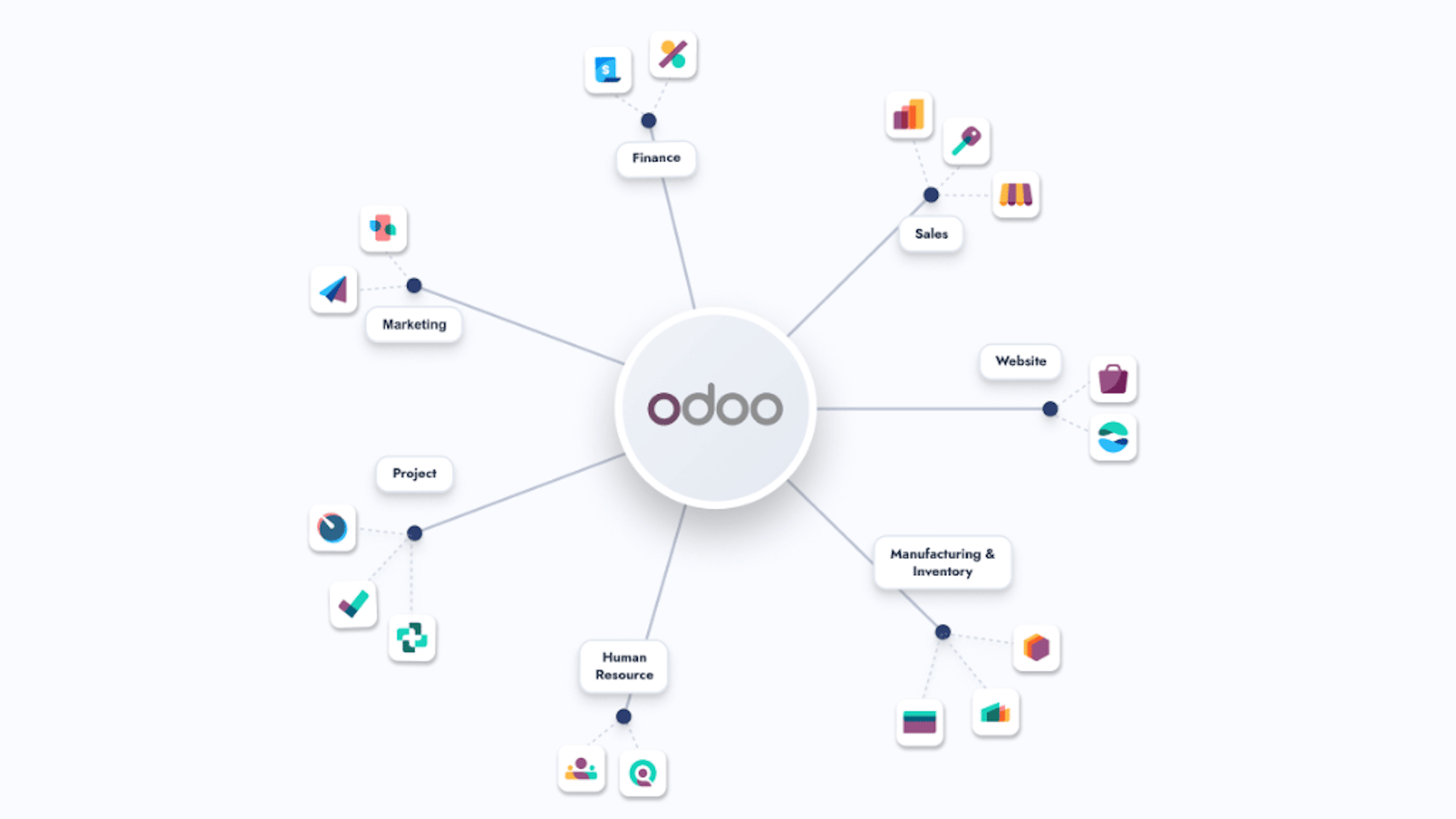
An ERP is a comprehensive management system which allows a company to centralize, automate, and optimize its business processes. OpenERP, now known as Odoo, fits this definition perfectly by offering a modular solution that encompasses various applications, providing a holistic view of the company.
Meaning of ERP (Enterprise Resource Planning)
ERP (Enterprise Resource Planning) is a type of software designed to integrate and automate a company’s core processes. It covers various functional areas within the organization, such as finance, sales, purchasing, human resources, inventory, and more. Its main objective is to provide a unified view of all company data, enabling informed decision-making and the efficient optimization of resources.
Functions covered by an ERP system such as OpenERP
An ERP system like OpenERP (Odoo) covers a wide range of features critical to business management. Among the most common are the following:
Inventory Management: It allows you to monitor inventory in real time, manage purchase and sales orders, and optimize inventory levels.
Sales and Purchases: It streamlines the management of customer orders, invoicing, purchasing of materials, and supplier management.
Accounting: It provides tools for financial accounting, including asset management, accounts payable and receivable, and financial reporting.
Human Resources (HR): Helps manage payroll, employees, absences, and performance.
CRM (Customer Relationship Management): Improves customer relationships by providing a platform for managing leads, opportunities, and communications.
Module integration: sales, purchasing, accounting, HR, CRM, etc.
One of the main Benefits of an ERP system like Odoo The fact is that it is not just a standalone system for a single business function. Thanks to its modular architecture, OpenERP/Odoo allows for the integration of multiple modules that communicate with one another, ensuring that information flows seamlessly between different areas of the company.
For example, the sales and purchasing modules are synchronized to streamline order management and negotiations with suppliers. Accounting is directly linked to sales and purchasing, ensuring that every transaction is accurately recorded in the books. This applies to all Odoo modules.
Benefits of using an open-source ERP system like OpenERP (Odoo)
Adopt a Open-source ERP systems such as OpenERP (now Odoo) offers a range of strategic advantages for companies. From cost savings to remarkable flexibility in adapting to specific processes, this technology is appealing to all types of businesses.
Lower costs without licenses
One of Odoo's biggest selling points is that it is a open-source software. This means there is no need to pay for expensive software licenses, making it an affordable option for both small and medium-sized businesses and large enterprises. The only costs involved are for implementation, support, and customization, which significantly reduces the initial investment compared to other traditional ERP systems.
Complete flexibility and adaptability to the business
The freedom offered by the Odoo open source It allows for virtually unlimited customization. Every company is unique and, therefore, requires solutions tailored to its specific operational processes. With OpenERP, it is possible to modify and extend the system’s functionality to suit the unique needs of each business. This flexibility translates into better integration of existing processes and the incorporation of new tools and features as market needs evolve.
Modular scalability based on needs
Part of the digital transformation with Odoo stems from the ability to scale modules according to business needs. Companies can start with essential modules and, as they grow, add additional ones. This scalability allows for a phased implementation, reducing risks and facilitating investment in long-term technology. This capability means that the ERP system supports the business from local expansion through to internationalization.
Active community and access to source code
Since it is open source, Odoo has an active community of developers who are constantly improving the system and developing new modules. Furthermore, because they have access to the source code, companies have the freedom to modify and customize the software to meet their specific needs without relying on a single vendor.
What versions of OpenERP are available and still in use?
The evolution of OpenERP has been marked by various versions that have introduced improvements and new features. Although the community has gradually moved toward newer versions, it is still possible to find companies that continue to use older versions due to prior investments and specific compatibility requirements.
OpenERP 6, 7, and the transition to Odoo 8
OpenERP 6 and OpenERP 7 These were very popular versions of the platform. However, when the system transitioned to Odoo 8, significant improvements were made in terms of usability, features, and performance. Although some companies may still be using older versions, most have already migrated to Odoo 8 or later versions.
Risks of continuing to use older versions (security, support, compatibility)
As expected, continuing to use older versions of OpenERP involves a number of risks, particularly in terms of security and compatibility. Older versions no longer receive security updates or official support, leaving businesses vulnerable to potential cyberattacks or technical issues. In addition, new features and modules are only available in the latest versions.
How do I migrate from OpenERP to modern versions of Odoo?
Migrating from older versions of OpenERP to modern versions of Odoo is a process that requires careful planning. First, A comprehensive assessment of the existing system is necessary, identifying custom modules and business-specific integrations. Next, a migration plan should be designed that includes pilot tests, user training, and verification that all critical functionalities are replicated in the new version.
It is recommended to work with consultants and developers with expertise in Odoo, who can provide guidance and execute the migration with precision. Investing in a well-planned migration results in a robust, secure tool that is ready to tackle future technological challenges. You can request an Odoo demo.
Will OpenERP still be a viable option in 2025?
By 2025, although many companies have migrated to modern versions of Odoo, there are still situations where OpenERP (in its older versions) continues to be used. However, the recommendation will always be to migrate to the current versions.
Current options: Odoo Community and Odoo Enterprise
Currently, Odoo versions are divided into Odoo Community (free) and Odoo Enterprise (paid). Odoo Community remains a viable option for companies seeking an affordable and flexible ERP solution, while Odoo Enterprise offers additional features and premium support. This dual approach allows companies to choose the option that best fits their resources and operational needs, striking a balance between cost and functionality.
Cases where it is still maintained for compatibility or due to prior investment
Although the This version of OpenERP is no longer under active development, some companies continue to use it for compatibility reasons or because they have made a significant investment. For example, companies that have invested heavily in customizations and bespoke developments may find it difficult to migrate without incurring significant additional costs or risks of operational disruption.
In these cases, the decision to stick with the previous version is based on a cost-benefit analysis, in which the investment and operational stability outweigh the need for new features. However, it is important to periodically evaluate this option, since Maintaining outdated solutions can lead to limitations and delays.
Recommendations for Upgrading or Migrating Your ERP
If you're using a older version of OpenERP, the best course of action is to conduct an audit of the current system and plan a migration to a modern version of Odoo. This can be done gradually and tailored to your needs, ensuring that key business processes continue to run smoothly. You also have the option of accessing the right training from Dynapps’ experts through the Odoo course.
Discover what Odoo can do for your business.
An initial meeting to see if we're a good fit, followed by a demonstration tailored to your processes.
More posts like this
8-minute read
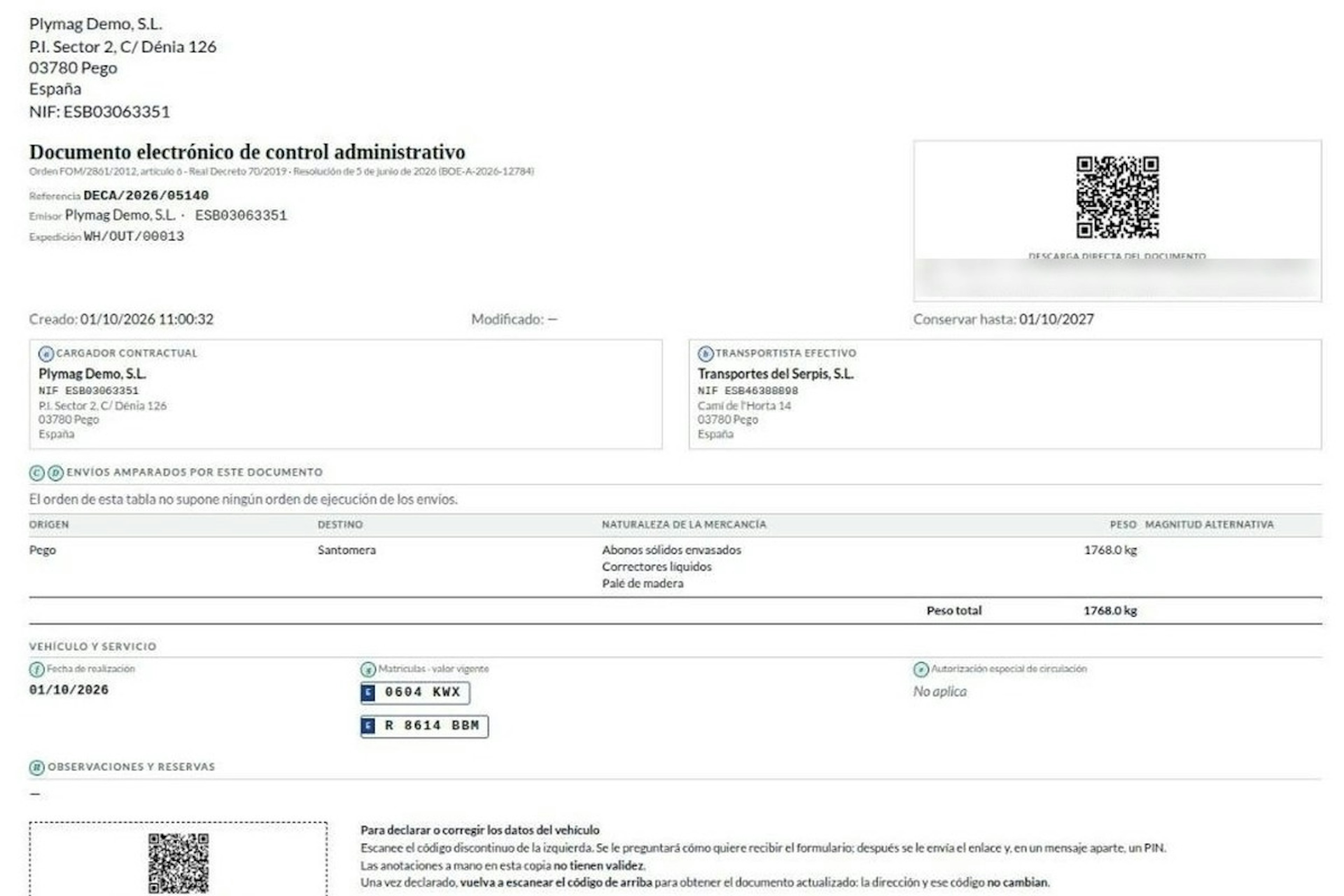
How the DeCA works in Odoo when the truck changes on the road: QR, secure link and PIN.
A breakdown, a different semi-trailer, a reservation about the load: this is how the DeCA is amended in Odoo during transport, with two QR codes, a link only the carrier receives and a six-digit PIN.
8-minute read
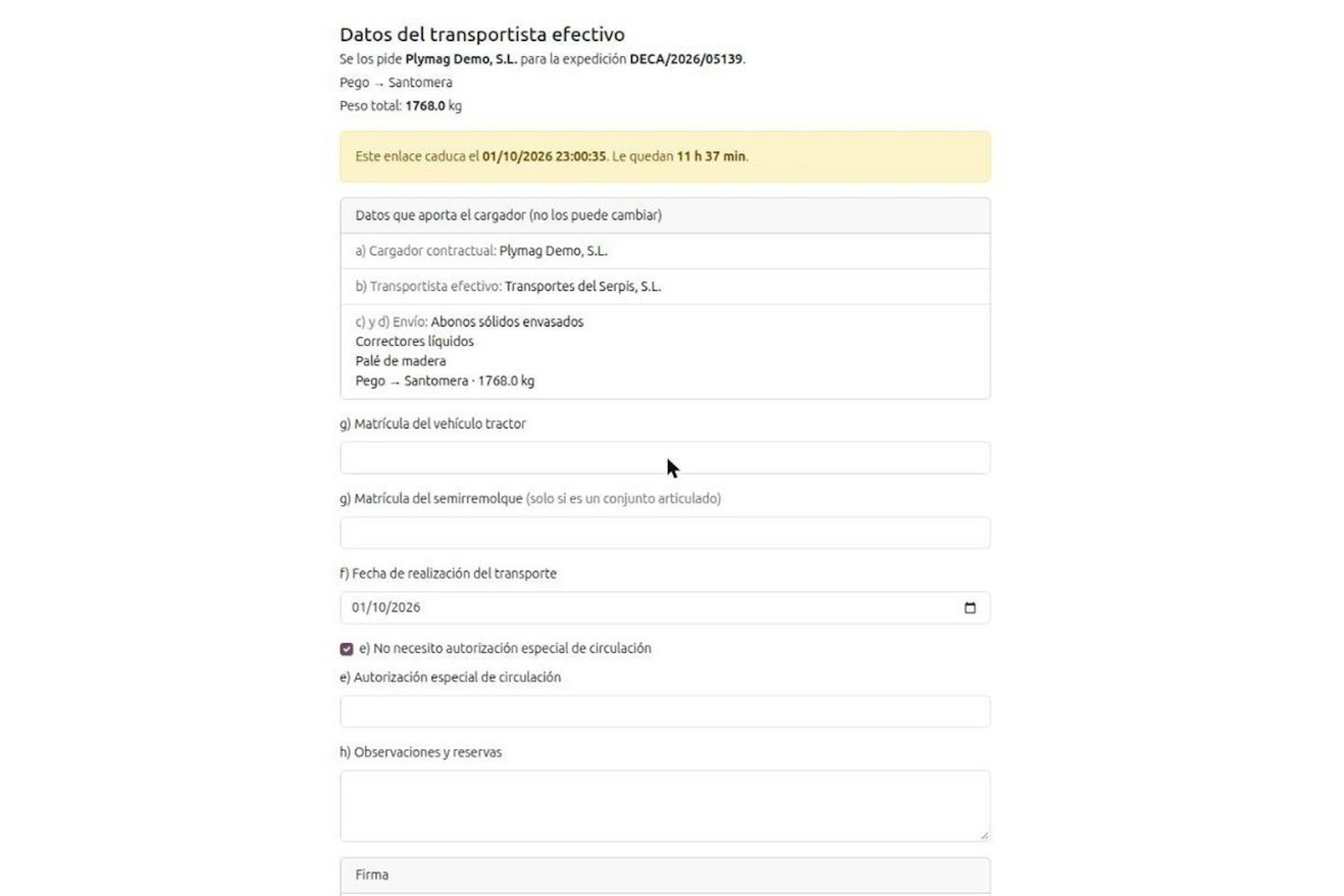
DeCA for transport companies with Odoo: you supply your data by link and issue it when you subcontract.
As the actual carrier, the DeCA binds you, but you will usually supply the special authorisation, date and plates through the link your client's Odoo sends you. When you subcontract, you will normally issue it from your own Odoo.
13-minute read
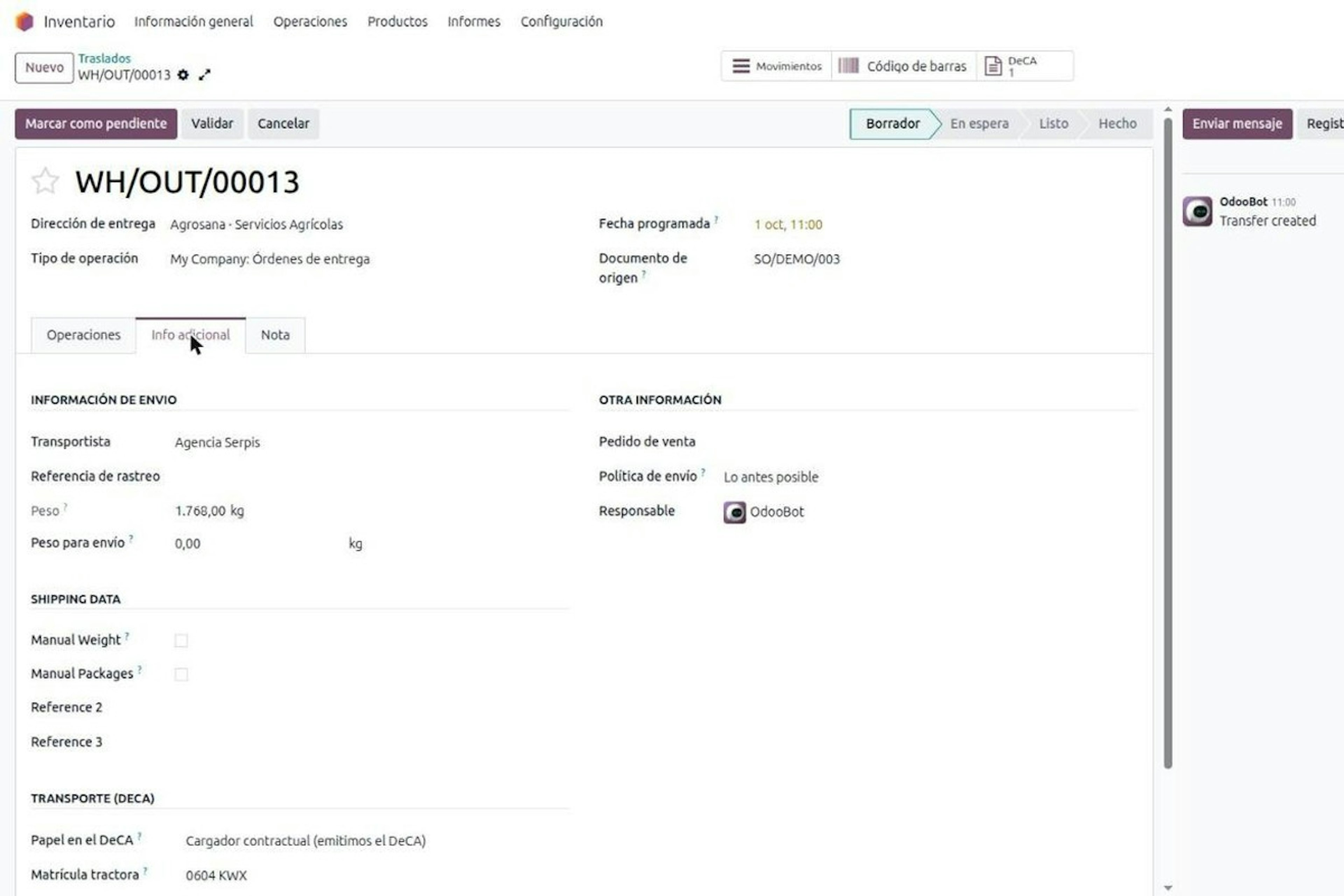
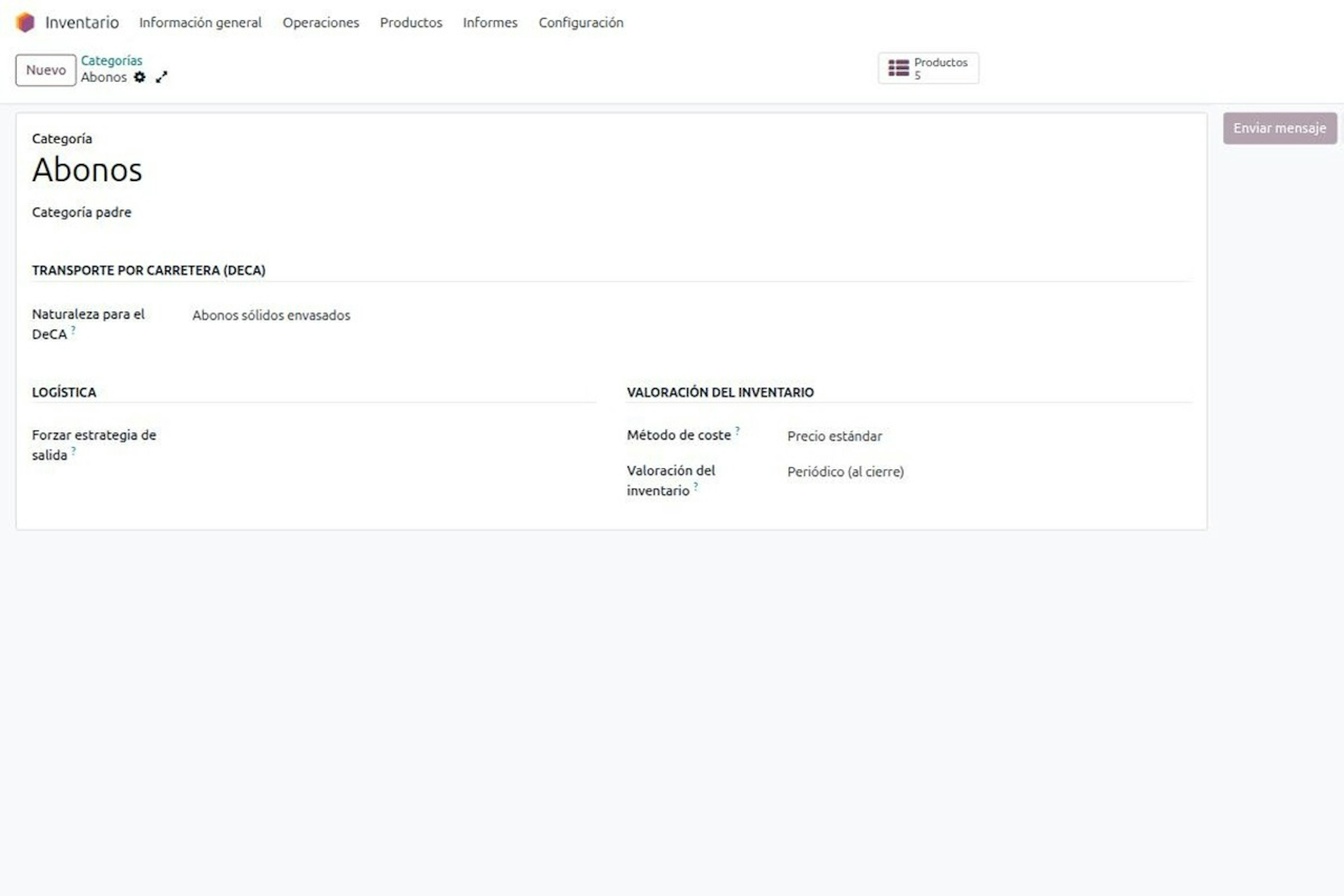
DeCA in Odoo: the transport control document, issued from the delivery order.
The DeCA is mandatory from 5 October 2026. If you run Odoo, you issue it from the delivery order with no separate tool, and the carrier adds the plate from their phone.
8-minute read
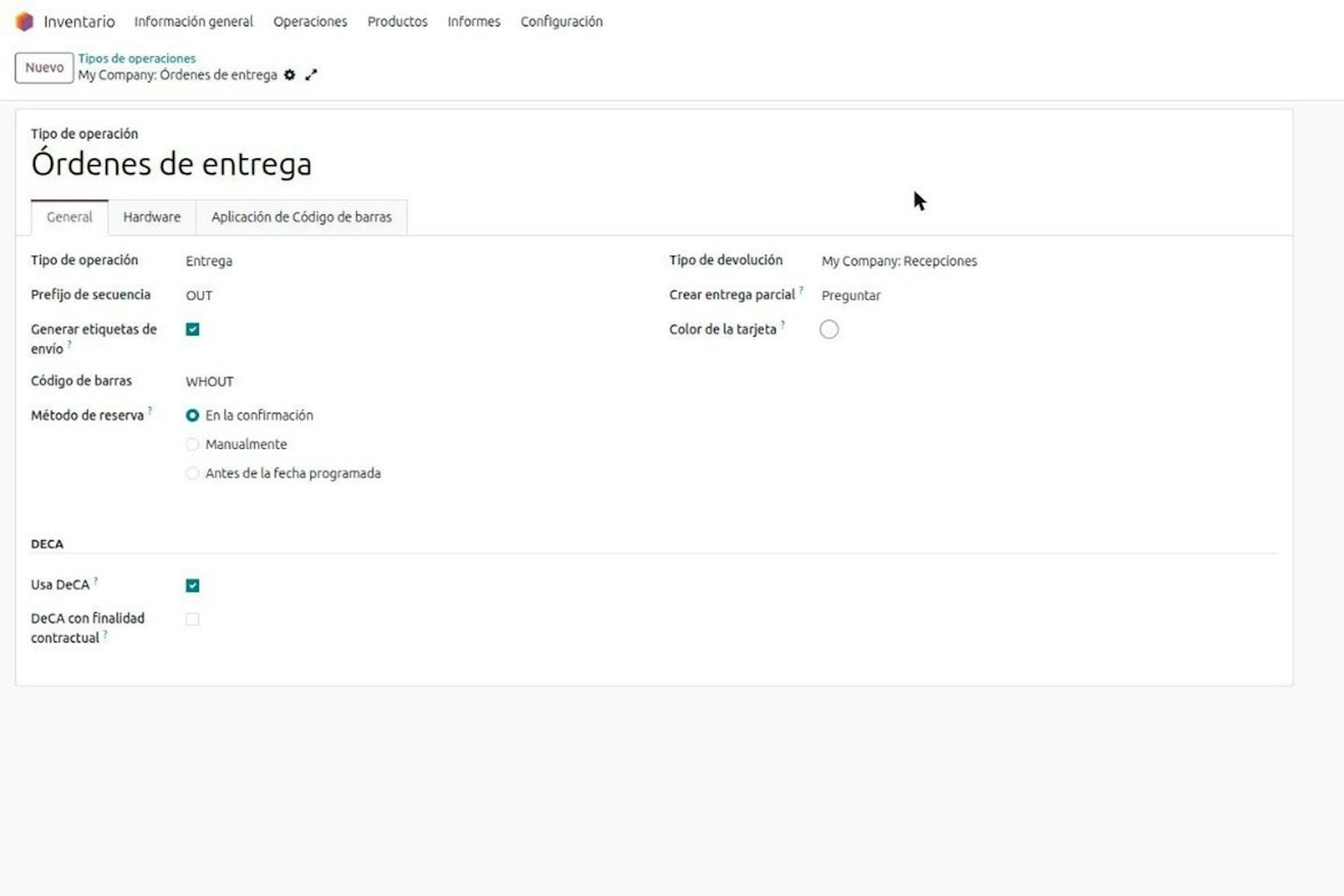
DeCA in Odoo for distribution companies: comply even without trucks.
If you distribute with Odoo and contract the transport, the DeCA binds you even if you own no truck, and you will usually be the one issuing it. What data you supply, why it is already on your delivery order and what daily work looks like.
8-minute read
Who must issue the DeCA: both parties, and in Odoo you decide it on each delivery order.
The DeCA binds both the contractual shipper and the actual carrier, even if you own no trucks. Five questions to find out which one you are and how it shows on each Odoo delivery order.

Odoo Partner in Barcelona
Odoo Partner in Barcelona
Odoo Implementation, Consulting, and Support for Businesses in Barcelona

Odoo Partner in Madrid
Odoo Partner in Madrid
Odoo Implementation, Consulting, and Support for Companies in Madrid

Odoo Partner in Alicante
Odoo Partner in Murcia
Odoo Implementation, Consulting, and Support for Businesses in Murcia

Odoo Partner in Murcia
Odoo Partner in Murcia
Odoo Implementation, Consulting, and Support for Businesses in Murcia
Odoo Consultants
Odoo Consultants
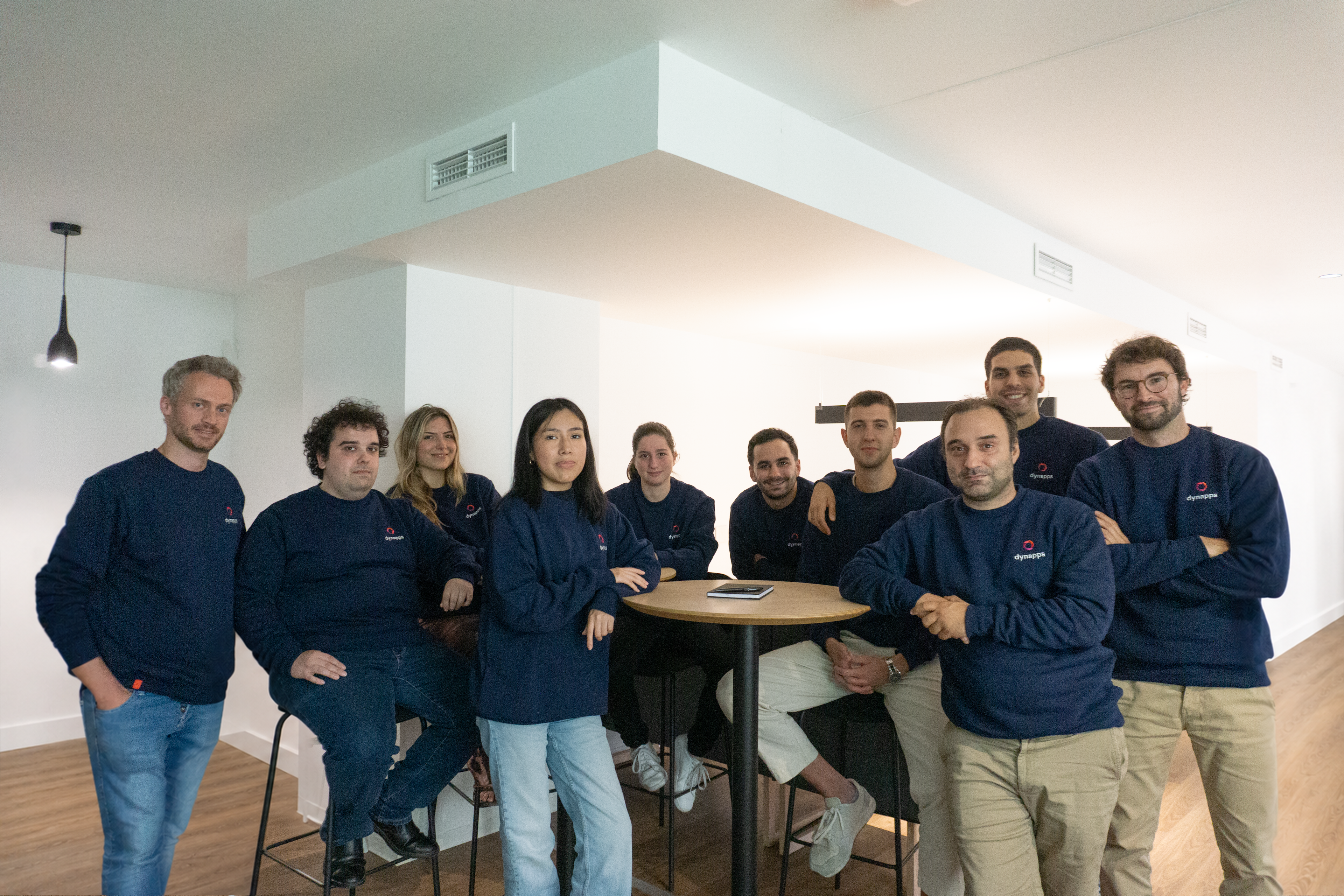
At Dynapps, we’ve been working as Odoo consultants in Spain since before we wrote the first line of configuration code: we understand your business, prioritize what truly adds value, and only then do we design the solution.