From Traditional ERP to an Intelligent System: Odoo's AI Revolution

Looking for a smart EP?
The revolution of Odoo with AI It has established itself as a strategy for those who want to stay competitive, optimize their operations, and improve their efficiency. It is a simple way to take your business to the next level by reducing time and costs without sacrificing service quality. In this regard, Odoo, a widely used open-source ERP, has evolved by enhancing its features to become a more versatile and innovative program.
At Dynapps, Odoo Gold Partner certified, we understand the importance of this digital revolution. In this article, we’ll show you how Odoo has integrated artificial intelligence, what benefits it offers, and how companies can leverage this technology to improve their productivity.
What is Odoo, and how has it evolved?
For those who don't know What is Odoo?, It is one of the most comprehensive and flexible ERP systems on the market. It stands out for its modularity and its ability to adapt to companies of all sizes, whether established businesses or small and medium-sized enterprises. It is noted for its flexibility, scalability, and, above all, the integration of innovative solutions that have positioned it as an essential tool for comprehensive business management.
History and Key Features of Odoo
Odoo was originally founded in 2005 as TinyERP by Fabien Pinckaers. Over the years, it has evolved into an integrated suite of business applications covering everything from accounting to inventory management, sales, human resources, and much more. Its open-source model makes it an accessible and adaptable option for businesses of all sizes.
Since its inception, the platform has been known for:
Modularity: It allows companies to select and integrate only the modules they actually need, such as accounting, sales, purchasing, and inventory management.
Customization: Thanks to its open-source nature, developers have enhanced the platform by tailoring it to specific requirements, making it suitable for industries as diverse as hospitality, healthcare, and manufacturing.
Constant updates: With each new release, Odoo introduces new features and improvements that respond to market trends, venturing into artificial intelligence, advanced analytics, and process automation.
User-friendly interface: Its intuitive design allows users to get up to speed quickly, making it easier to transition from traditional systems to integrated, efficient management platforms.
The Need for Innovation in ERP Systems
The digital age calls for solutions that go beyond simple administrative management. Markets are becoming increasingly competitive, and vast amounts of data are being generated. This has created an urgent need for innovation in ERP systems, where traditional models often lack the capacity to analyze large volumes of data in real time.
In addition, Technology makes it possible to eliminate repetitive and manual tasks, freeing up resources for activities of greater strategic value. Today, AI and machine learning offer the ability to predict trends, optimize inventory, and personalize the customer experience. In an ever-changing environment, companies need systems that can quickly adapt to new needs and challenges.
Artificial Intelligence in the Business Context
As expected, Artificial Intelligence has made its way into the business world to become an indispensable tool. For example, there are Odoo modules using AI across a wide range of areas, from data management to automation and improved decision-making. This is important because it translates into competitive advantages for the business.
Common Applications of AI in Business
Artificial intelligence is being implemented in various areas of business, from customer service to strategic decision-making. Although it may not be immediately apparent, AI in management systems can be seen in the form of:
Chatbots and virtual assistants: They enable automated customer service, improving the user experience and reducing response times.
Predictive analytics: By using machine learning techniques, companies can forecast demand, optimize inventory, and proactively manage risks.
Natural Language Processing (NLP): It facilitates the interpretation and analysis of large volumes of text data, such as social media comments, emails, and reviews, which is vital for reputation management and digital marketing.
Process automation: RPA (Robotic Process Automation) allows for the automation of repetitive tasks, freeing up employees to focus on more creative activities.
Pattern and anomaly detection: Whether it's detecting fraud or monitoring production processes, AI identifies unusual behavior that can help prevent financial losses.
Benefits of AI in Business Management
Although artificial intelligence has been heavily criticized, the truth is that its benefits are far more promising than they appear. Its implementation offers a number of advantages, the most notable of which include:
Operational efficiency: Automating tasks significantly reduces processing times and improves productivity.
Error reduction: By automating processes, the likelihood of human error in data management and operational processes is minimized.
Data-driven decisions: Advanced analytics and real-time data processing enable organizations to make strategic decisions with a high degree of accuracy.
Resource optimization: AI enables more efficient allocation of human and material resources, boosting performance and reducing operating costs.
Improved customer service: AI-powered tools provide quick, personalized responses, boosting customer satisfaction and loyalty.
Integrating AI into Odoo
The Digital Transformation with Odoo would not be complete without the inclusion of AI. This adaptation is a clear example of how ERP systems can evolve from being simple management tools to becoming intelligent systems. It is now possible to achieve higher levels of automation and customization.
AI-powered Odoo modules
Odoo has developed various modules that benefit from the integration of artificial intelligence technologies. Tasks are now faster, simpler, and more accurate, which makes them easier to complete. Among the most notable are:
CRM: Odoo's CRM module uses AI to identify the most promising sales opportunities and suggest actions to improve conversion rates.
Accounting: AI can automate the bank reconciliation process, reducing the administrative burden and improving the accuracy of financial records.
Inventory management: In this case, AI optimizes inventory management by forecasting demand and adjusting stock levels in real time.
Human Resources: Human resources management, performance analysis, and the automation of recruitment and hiring processes are enhanced by integrating machine learning and predictive analytics solutions.
Process Automation with AI in Odoo
To learn more about the AI automation process, you can request the Odoo demo. It is one of the most powerful aspects of integration, as it allows for:
Optimize workflows: Processes that previously required multiple manual steps are now handled automatically, reducing the workload and minimizing the margin for error.
Personalizing the experience: AI helps personalize customer interactions and tailor product and service offerings based on behavioral patterns and individual preferences.
Forecasting and Planning: Using machine learning algorithms, you can predict market trends, optimize the supply chain, and adjust strategies in real time.
Considerations for Implementing AI in Odoo
The Implementation of artificial intelligence solutions in Odoo can radically transform the way you run your business. However, it requires careful planning and a detailed assessment of the company’s specific needs.
Assessment of Business Needs and Objectives
Before starting the Digital Transformation with Odoo, it is essential to conduct an internal assessment that takes various factors into account. For example, it is recommended to identify which processes are suitable for automation and in which areas artificial intelligence can add value.
Also, it is necessary set measurable goals, such as reducing processing times, optimizing inventory, or improving customer service. Assess the technological infrastructure and the internal resources available to implement new technologies are essential to avoid making an unnecessary investment.
Selecting the right modules and tools
Odoo offers a wide range of modules, so it is important to select those that align with your business objectives. The integration of AI should focus on the modules that provide the greatest value to the company, such as CRM, inventory management, and human resources.
We recommend evaluating various Odoo-compatible tools and plugins that enable the integration of artificial intelligence, taking into account their cost, scalability, and ease of integration. It is also advisable to choose those that can adapt to future needs and integrate seamlessly with other existing systems.
Team training and onboarding
Implement Odoo with AI The adoption of emerging ERP technologies requires training and development for the team. Training programs should be implemented to enable staff to master the new tools and make the most of the enhanced software’s features.
If this seems overwhelming, it is essential to have a team of experts on hand to guide you and resolve any issues that may arise during the integration process. A trusted partner, such as Dynapps, ensures a smooth transition.
The Future of Odoo with Artificial Intelligence
The the compatibility of artificial intelligence with ERP systems marks the beginning of a new era in business management. In this context, Odoo’s future is shaped by trends and developments that promise to further revolutionize the way businesses operate.
Innovations in development
It is expected that Odoo continues to improve its AI capabilities, introducing new features such as more accurate demand forecasts and greater task automation. For example, thanks to its integration with the IoT (Internet of Things), it allows data from connected devices to be integrated in real time to adjust production and logistics processes.
It is also quite possible that development of algorithms that automatically detect and neutralize threats, safeguarding the integrity of business information. These innovations promise to keep Odoo at the forefront and usher in a new era of business efficiency and competitiveness.
Expected impact on business management
Technology will continue to advance, so as AI progresses, business management in Odoo will become even smarter. In addition to Operational agility and supply chain optimization...this allows for rapid adaptation to market changes, offering more customized and efficient solutions.
On the other hand, one impact that is always expected is the increased competitiveness. The efficient use of technology will create a competitive advantage, enabling companies to stand out in an increasingly demanding market.
Would you like to enjoy the benefits of technology? At Dynapps, we understand the importance of this technological revolution. That’s why we offer our services as certified partner for implementing Odoo comprehensive service. Contact us!
Conclusion
The integration of Odoo with AI represents a revolution for traditional ERP systems. By incorporating AI into its modules, Odoo is enabling companies to improve their processes, reduce costs, and make more informed decisions. The application of AI in areas such as CRM, inventory, accounting, and human resources offers tangible benefits in terms of efficiency and competitiveness. However, this is not all; the future lies ahead and looks very promising.
The shift from traditional ERP to intelligent systems is an unstoppable trend that is redefining business management.
With its constant evolution and the integration of artificial intelligence, Odoo has established itself as the most comprehensive and versatile ERP system.
To ensure a successful implementation, it is essential to assess business needs, select the appropriate modules, and train the team.
No matter the size of the company or the industry, Odoo with AI is key to a more efficient and productive future.
Discover what Odoo can do for your business.
An initial meeting to see if we're a good fit, followed by a demonstration tailored to your processes.
More posts like this
8-minute read
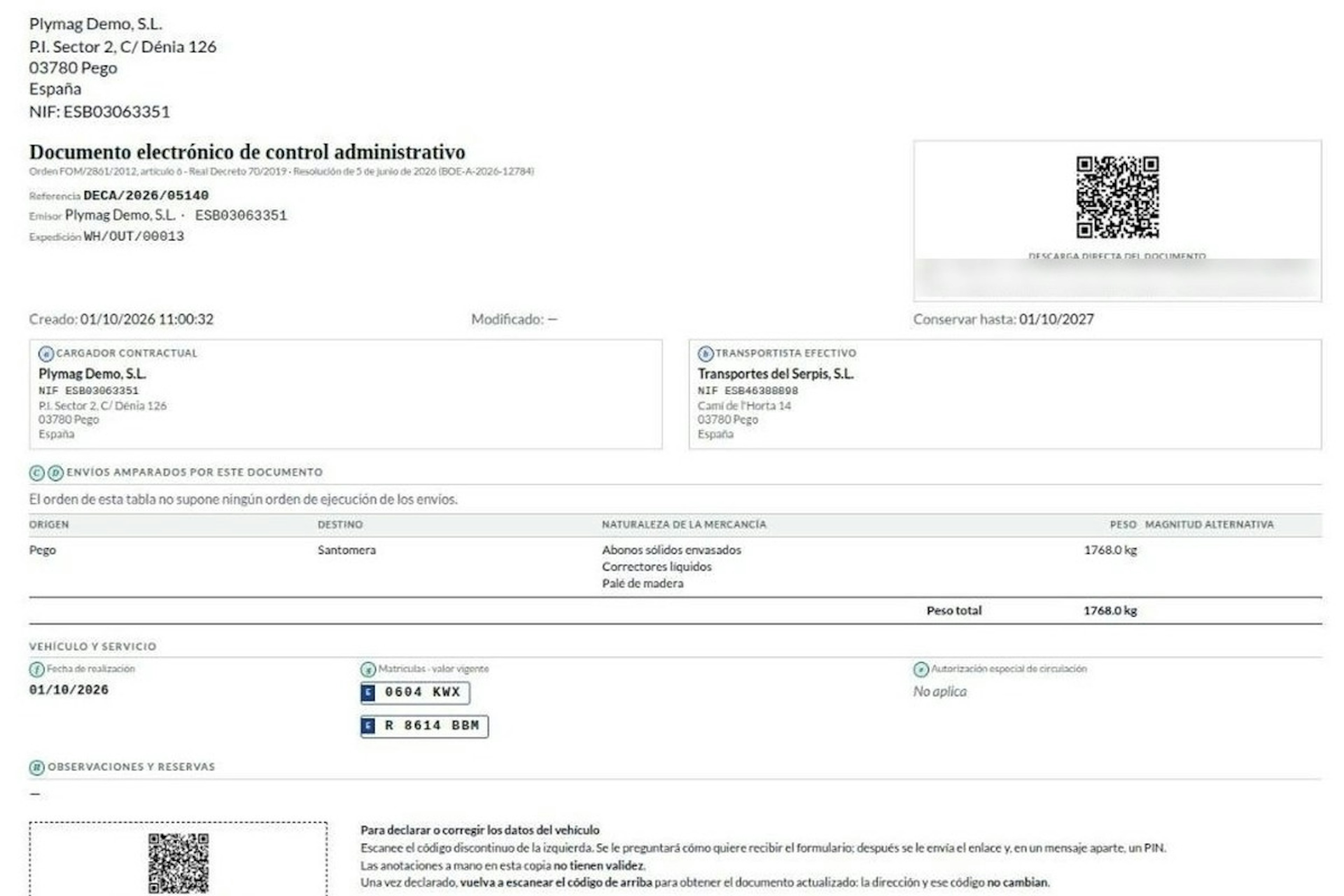
How the DeCA works in Odoo when the truck changes on the road: QR, secure link and PIN.
A breakdown, a different semi-trailer, a reservation about the load: this is how the DeCA is amended in Odoo during transport, with two QR codes, a link only the carrier receives and a six-digit PIN.
8-minute read
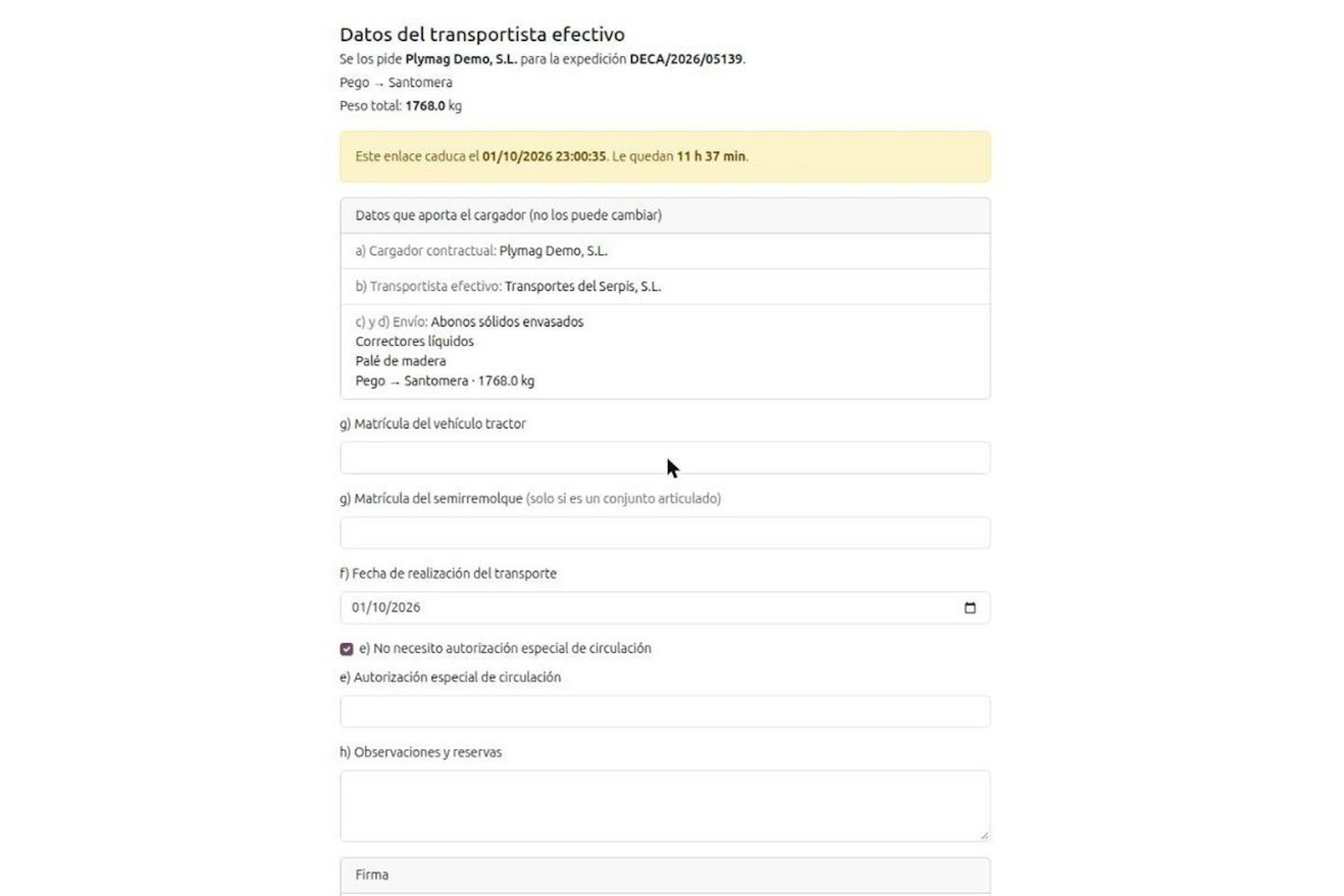
DeCA for transport companies with Odoo: you supply your data by link and issue it when you subcontract.
As the actual carrier, the DeCA binds you, but you will usually supply the special authorisation, date and plates through the link your client's Odoo sends you. When you subcontract, you will normally issue it from your own Odoo.
13-minute read
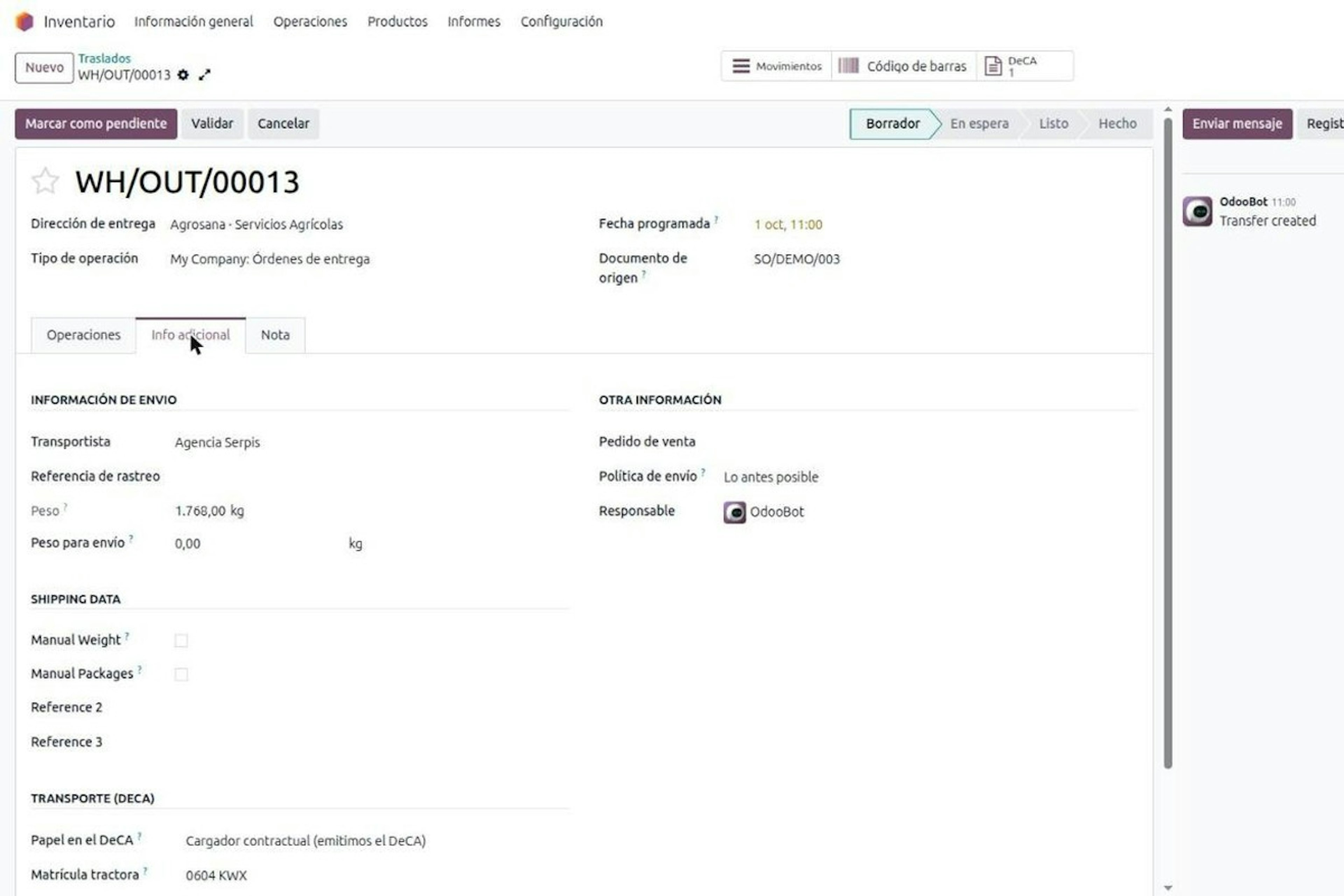
DeCA in Odoo: the transport control document, issued from the delivery order.
The DeCA is mandatory from 5 October 2026. If you run Odoo, you issue it from the delivery order with no separate tool, and the carrier adds the plate from their phone.
8-minute read
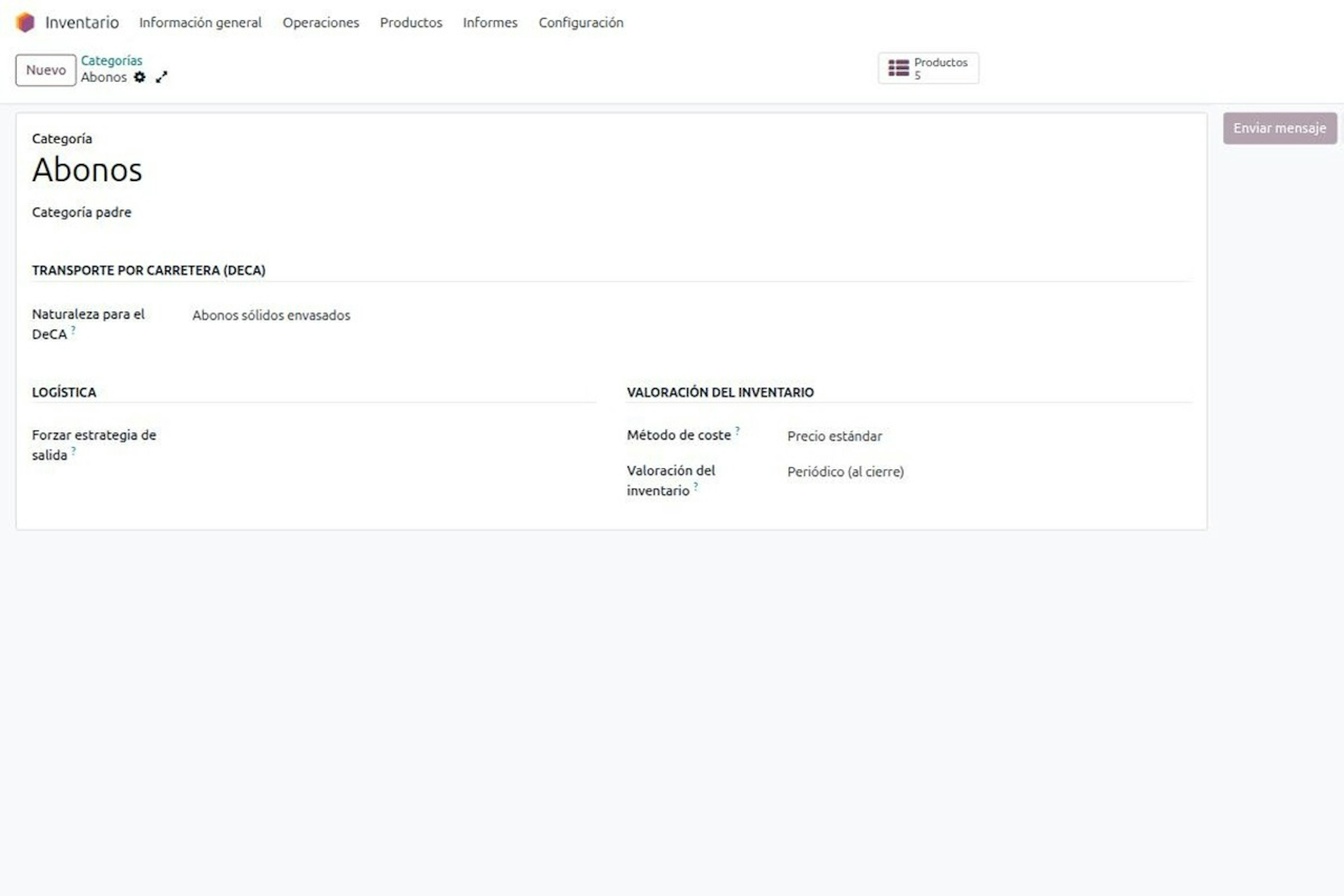
DeCA in Odoo for distribution companies: comply even without trucks.
If you distribute with Odoo and contract the transport, the DeCA binds you even if you own no truck, and you will usually be the one issuing it. What data you supply, why it is already on your delivery order and what daily work looks like.
8-minute read
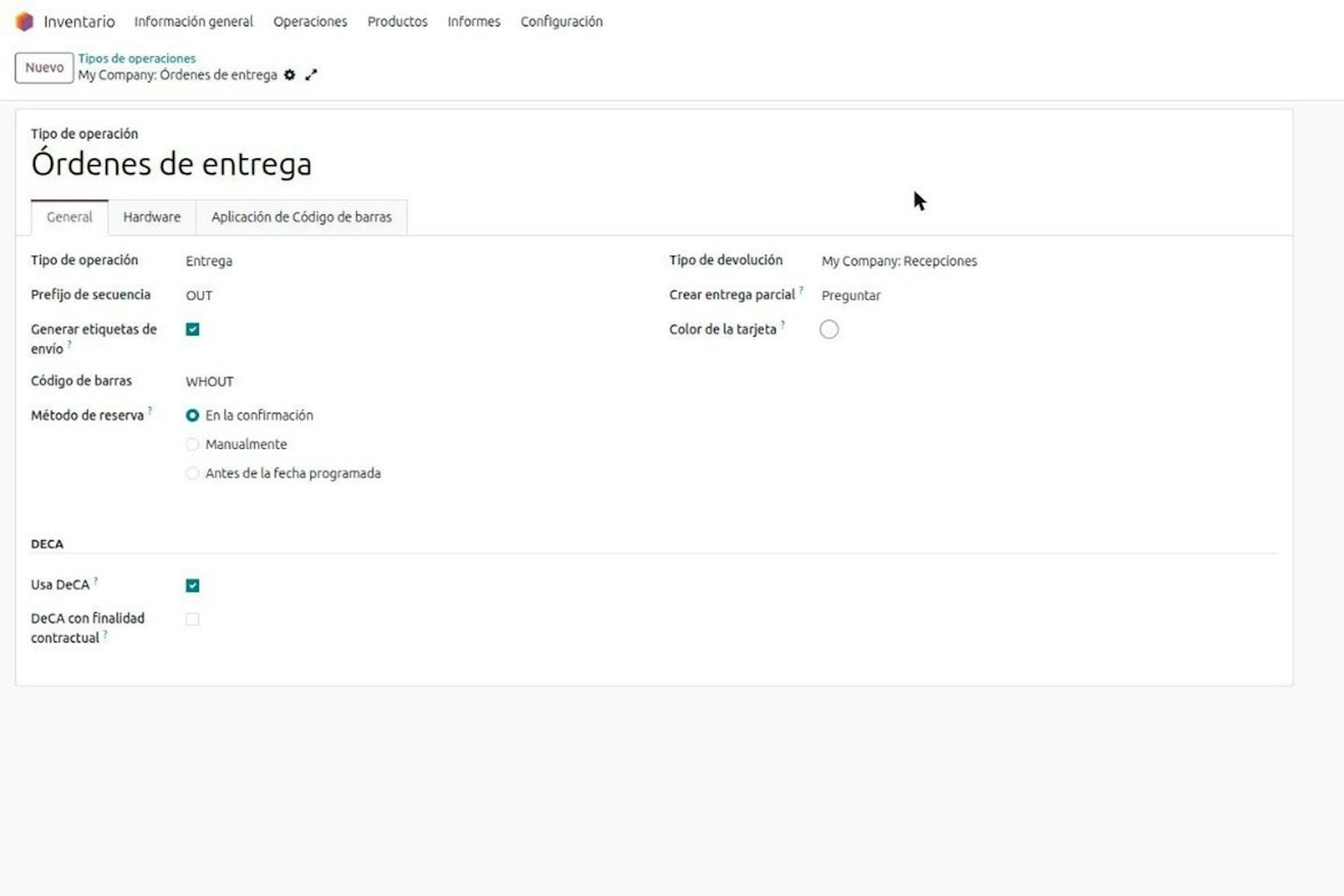
Who must issue the DeCA: both parties, and in Odoo you decide it on each delivery order.
The DeCA binds both the contractual shipper and the actual carrier, even if you own no trucks. Five questions to find out which one you are and how it shows on each Odoo delivery order.

Odoo Partner in Barcelona
Odoo Partner in Barcelona
Odoo Implementation, Consulting, and Support for Businesses in Barcelona

Odoo Partner in Madrid
Odoo Partner in Madrid
Odoo Implementation, Consulting, and Support for Companies in Madrid

Odoo Partner in Alicante
Odoo Partner in Murcia
Odoo Implementation, Consulting, and Support for Businesses in Murcia

Odoo Partner in Murcia
Odoo Partner in Murcia
Odoo Implementation, Consulting, and Support for Businesses in Murcia
Odoo Consultants
Odoo Consultants
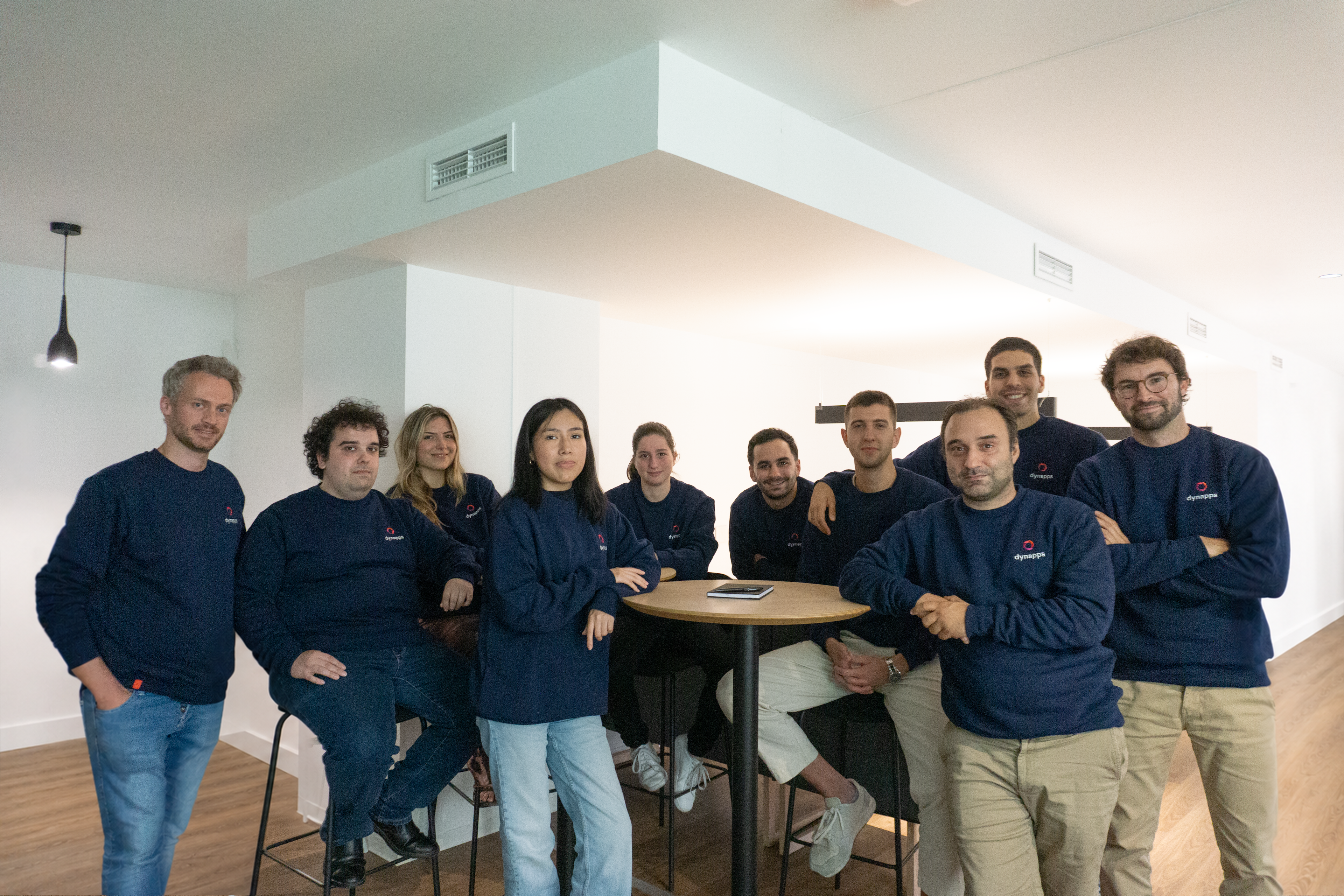
At Dynapps, we’ve been working as Odoo consultants in Spain since before we wrote the first line of configuration code: we understand your business, prioritize what truly adds value, and only then do we design the solution.