Odoo vs. Open-Source Solutions: Pros and Cons

In the world of open-source ERP systems, Odoo 19 has established itself as one of the most widely adopted solutions among businesses of all sizes. However, it is not the only option available, and before choosing a platform, it is important to understand its advantages, limitations, and how it compares to other open-source options.
This analysis compares Odoo with other popular open-source ERP systems, highlighting their technical, functional, and strategic differences, so you can make an informed decision about the best option for your business.
Overview: How does Odoo compare to other open-source solutions?
In today's business management software landscape, open-source ERP systems have established themselves as viable alternatives to more expensive proprietary solutions. Among them, Odoo has positioned itself as one of the most comprehensive options, thanks to its modular architecture, its large community, and its balance between ease of use and customization capabilities.
Odoo: Modular Architecture
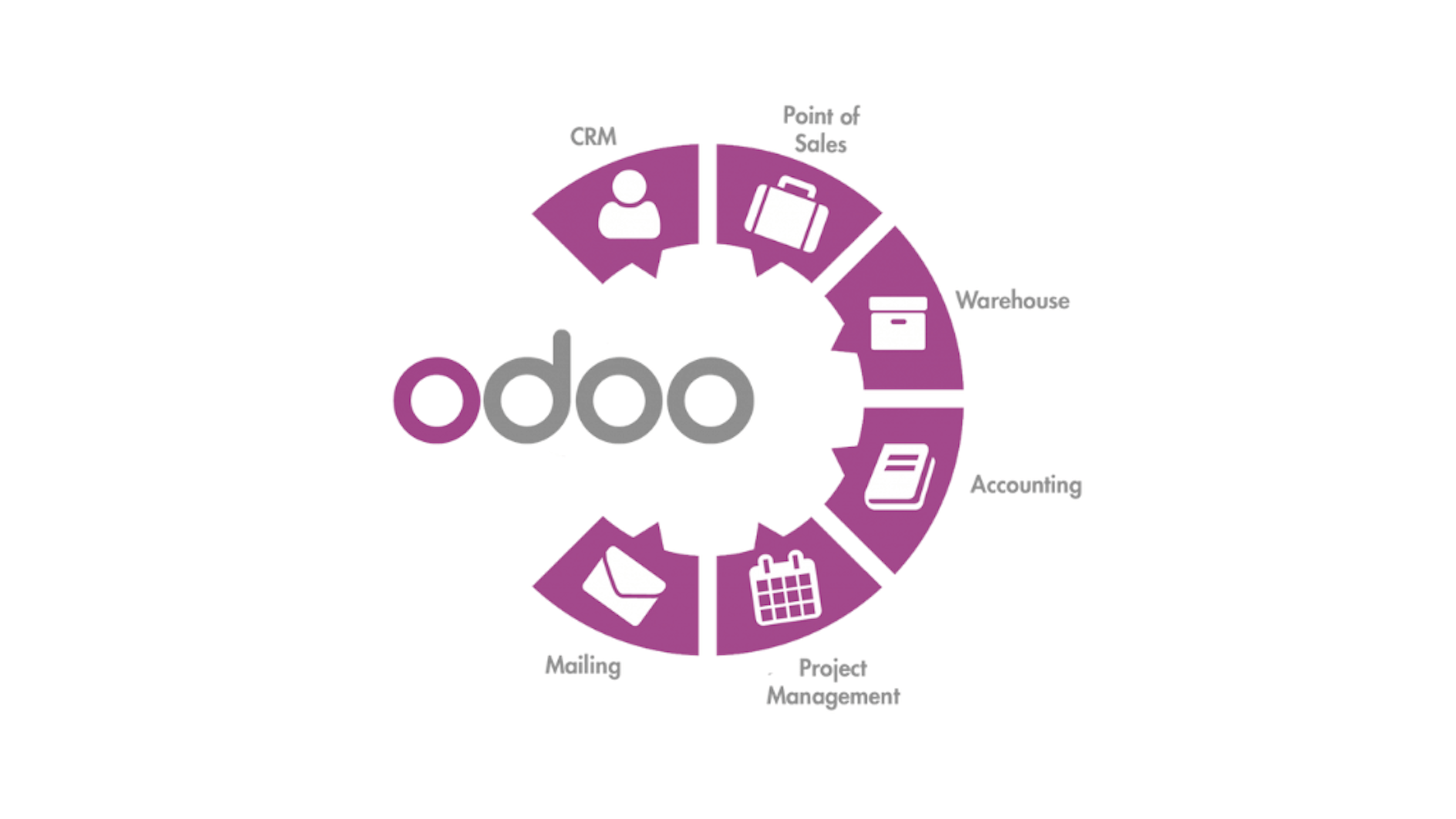
Odoo differs from many traditional ERP systems because it does not require you to implement a complete system from the start. Its modular architecture allows each company to start with the processes it needs to cover—sales, accounting, inventory, production, marketing, or human resources—and, as it grows, add more modules without losing consistency in management.
This makes it a flexible and scalable solution for both small and medium-sized businesses and large companies.
It comes in two versions:
Odoo Community: free, open-source, with basic features and community-based support.
Odoo Enterprise: a paid version with advanced modules, official support, and guaranteed updates.
Benefits of Odoo
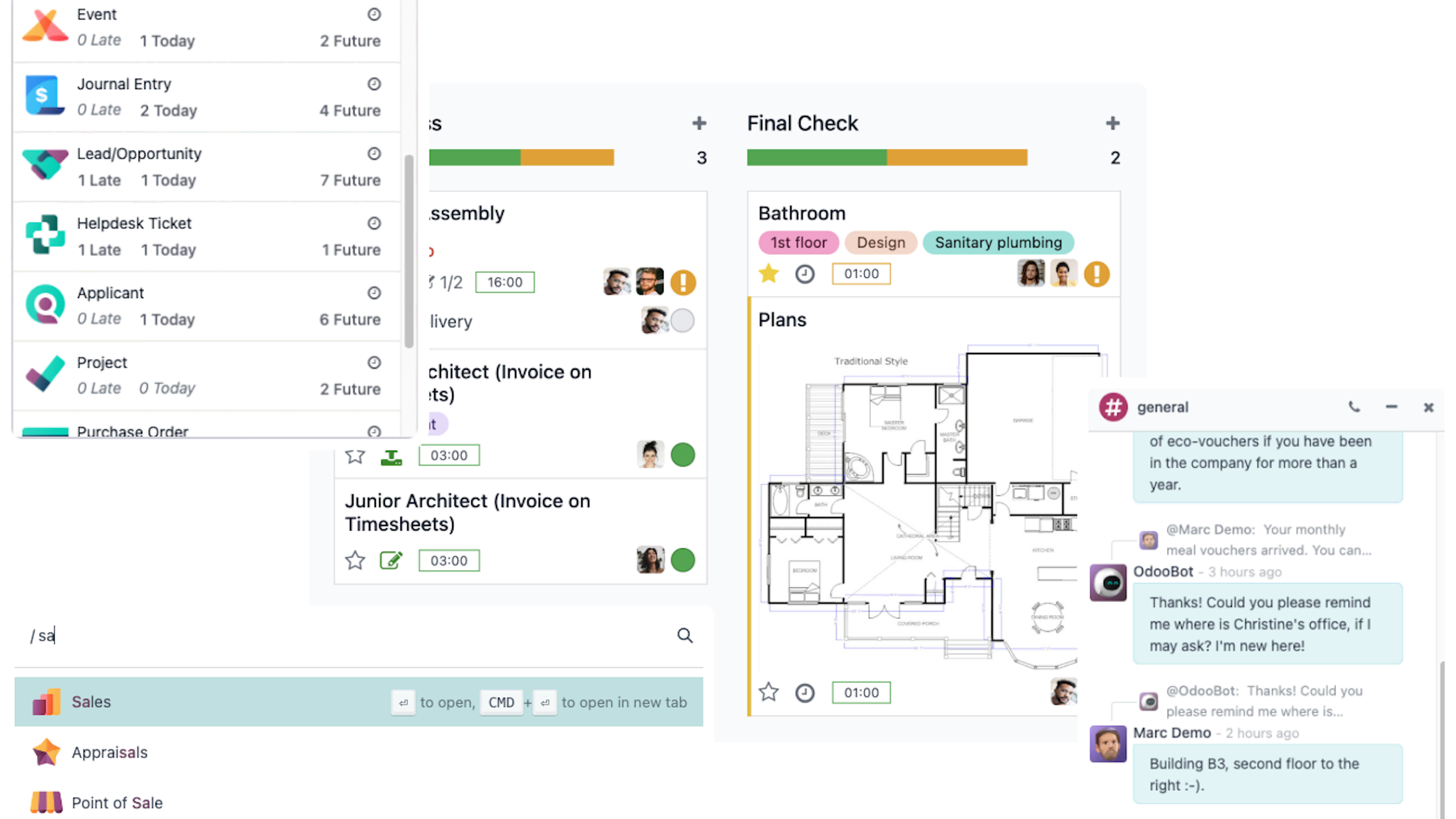
The benefits of Odoo explain why it has become one of the most widely adopted open-source ERP systems worldwide. Its design and community set it apart in terms of both flexibility and usability.
Flexibility, modularity, scalability, and customization
Odoo is suitable for businesses of all sizes and industries thanks to its modular approach. You can enable only the modules you need and customize them using open-source code or third-party apps. This combination allows for advanced customization without compromising the system’s stability.
Extensive ecosystem and active community
Odoo has a very active global community, thousands of developers, and over 30,000 available applications. This makes it easy to find specific solutions, integrations, and ongoing support. The community actively contributes to improvements, updates, and bug fixes.
Modern and user-friendly interface
Unlike many open-source solutions, Odoo offers an intuitive, modern interface designed with usability in mind. This reduces resistance to change among teams, accelerates digital adoption, and minimizes the need for extensive training.
Reduction in licensing costs
Although Odoo offers a paid Enterprise version, its Community version is free and open-source. This allows many companies to get started without any licensing costs, investing only in implementation, customization, and support.
Disadvantages of Odoo
Although Odoo is one of the most comprehensive options available, it is not without its limitations. Understanding these limitations allows you to plan a more realistic implementation and avoid surprises.
Community Edition with limited support
Although the Community version of Odoo is powerful, it does not include official support or certain advanced features. This can be a limitation for companies that require technical guarantees, SLAs, or specific features.
Technical learning curve
For developers and administrators, the learning curve can be steep if they have no prior experience with the Odoo stack (Python, PostgreSQL, XML, etc.). Without a specialized partner, implementation may take longer than desired.
Comparison: Odoo vs. Other Open-Source Solutions
When choosing an open-source ERP system, it’s not enough to just look at the features: ease of use, the community behind the project, and the technical architecture are all key factors.
Ease of use and community
While Odoo stands out for its modern interface, other open-source ERP systems such as ERPNext or Tryton may be more technical or have steeper learning curves. The Odoo community is considerably larger, making it easier to find solutions to common problems or specific development needs.
Architecture and underlying technologies
Odoo uses established technologies such as Python and PostgreSQL and is based on a modular MVC architecture. In contrast, other solutions may rely on less well-known technology stacks or have more monolithic architectures, which makes customization and long-term scalability more difficult.
How Dynapps Enhances the Benefits of Odoo Compared to Other Alternatives
The real difference between implementing Odoo in a standard way and doing so with the support of an official partner lies in the added value generated throughout the process. Dynapps does more than just install an ERP system; it translates business needs into concrete solutions tailored to the operational realities of each industry. In this way, the implementation not only meets the tool’s technical requirements but also becomes a driver of efficiency, cost savings, and sustainable growth.
Specialized implementation
Every company has unique processes, so applying generic configurations limits the ERP's potential. Dynapps analyzes the business model, workflows, and industry-specific characteristics before designing the Odoo configuration.
This ensures that each module (sales, purchasing, inventory, accounting, CRM, production, etc.) integrates seamlessly into daily operations, eliminating duplication and improving traceability. The result is a system that fits the company’s reality from day one.
Training and Technical Support
The success of an ERP system depends not only on its configuration, but also on the teams’ ability to adopt and make the most of it. Dynapps offers practical, tailored training for both users and administrators, reducing the learning curve and ensuring that every employee understands how to use Odoo in their daily tasks.
In addition, ongoing technical support ensures that, should any issues arise or updates be needed, the company has access to expert assistance that addresses questions and keeps the system up to date.
Smart and scalable solution
Many companies fear that implementing an ERP system will slow down operations or cause bottlenecks. With Dynapps, implementation is planned in a modular fashion, starting with the most critical areas (such as billing and accounting) and gradually expanding to other processes.
This methodology enables growth without disrupting operations and ensures that the system evolves at the same pace as the company, supporting both expanding SMEs and more complex multinational organizations.
Guaranteed savings, efficiency, and risk reduction
Dynapps’ extensive experience with multiple implementations helps minimize common mistakes that often drive up the cost of ERP projects: inefficient configurations, failed integrations, or cost overruns due to poor planning.
Working with a specialized partner means maintaining control over your budget, ensuring seamless integration with other corporate systems (CRM, e-commerce, BI, etc.), and reducing operational risks. Ultimately, it’s not just about implementing Odoo, but about doing so in a cost-effective and secure manner.
Discover what Odoo can do for your business.
An initial meeting to see if we're a good fit, followed by a demonstration tailored to your processes.
More posts like this
8-minute read
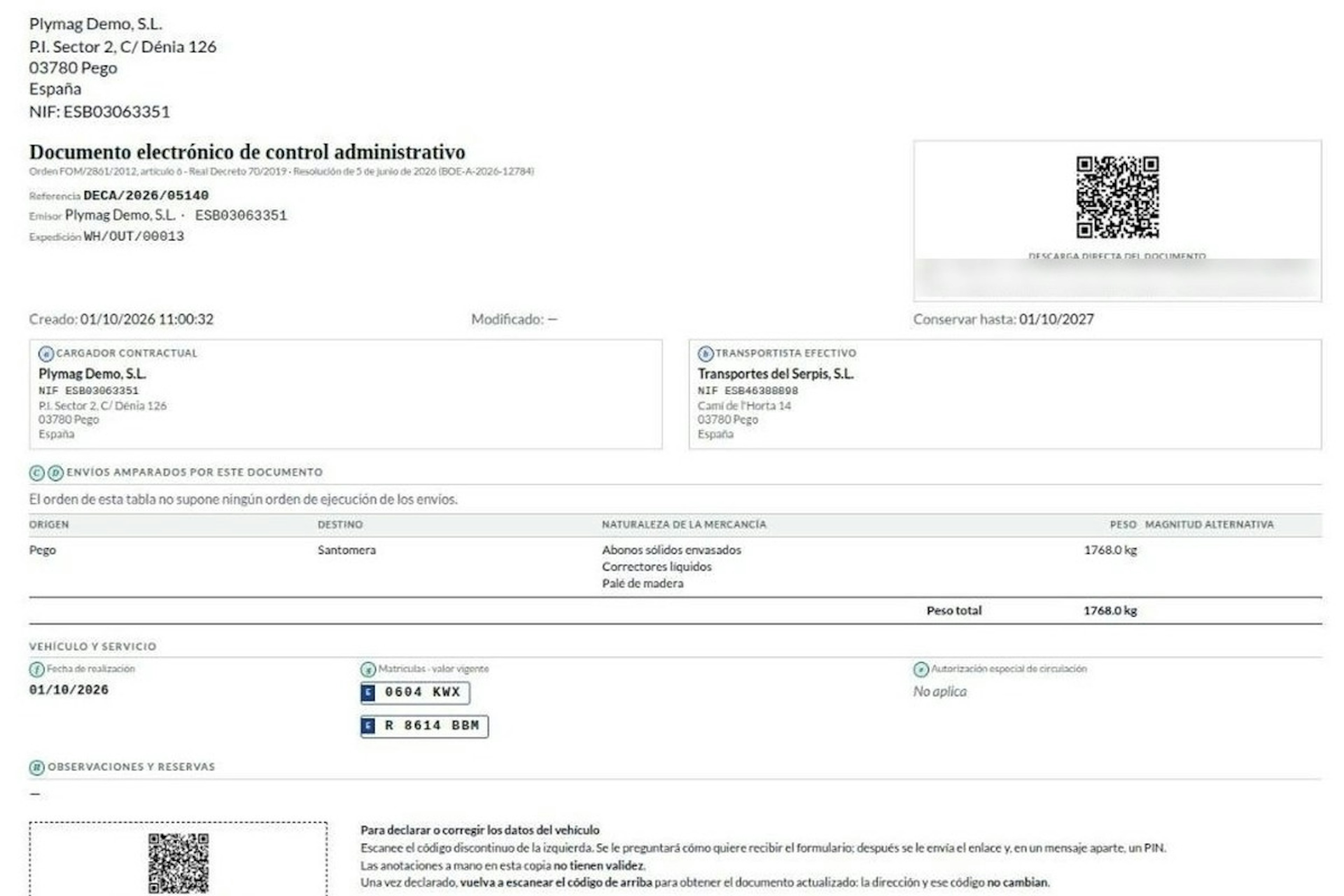
How the DeCA works in Odoo when the truck changes on the road: QR, secure link and PIN.
A breakdown, a different semi-trailer, a reservation about the load: this is how the DeCA is amended in Odoo during transport, with two QR codes, a link only the carrier receives and a six-digit PIN.
8-minute read
DeCA for transport companies with Odoo: you supply your data by link and issue it when you subcontract.
As the actual carrier, the DeCA binds you, but you will usually supply the special authorisation, date and plates through the link your client's Odoo sends you. When you subcontract, you will normally issue it from your own Odoo.
13-minute read
DeCA in Odoo: the transport control document, issued from the delivery order.
The DeCA is mandatory from 5 October 2026. If you run Odoo, you issue it from the delivery order with no separate tool, and the carrier adds the plate from their phone.
8-minute read
DeCA in Odoo for distribution companies: comply even without trucks.
If you distribute with Odoo and contract the transport, the DeCA binds you even if you own no truck, and you will usually be the one issuing it. What data you supply, why it is already on your delivery order and what daily work looks like.
8-minute read
Who must issue the DeCA: both parties, and in Odoo you decide it on each delivery order.
The DeCA binds both the contractual shipper and the actual carrier, even if you own no trucks. Five questions to find out which one you are and how it shows on each Odoo delivery order.

Odoo Partner in Barcelona
Odoo Partner in Barcelona
Odoo Implementation, Consulting, and Support for Businesses in Barcelona

Odoo Partner in Madrid
Odoo Partner in Madrid
Odoo Implementation, Consulting, and Support for Companies in Madrid

Odoo Partner in Alicante
Odoo Partner in Murcia
Odoo Implementation, Consulting, and Support for Businesses in Murcia

Odoo Partner in Murcia
Odoo Partner in Murcia
Odoo Implementation, Consulting, and Support for Businesses in Murcia

Odoo Consultants
Odoo Consultants
At Dynapps, we’ve been working as Odoo consultants in Spain since before we wrote the first line of configuration code: we understand your business, prioritize what truly adds value, and only then do we design the solution.