Companies that use Odoo

More and more companies around the world are choosing Odoo as their enterprise resource planning (ERP) system. Its modular architecture, flexibility, powerful cross-departmental integration, and open-source model have made Odoo the choice of thousands of organizations in over 120 countries.
From small startups to large industrial corporations, including e-commerce businesses, law firms, and professional service firms, Odoo adapts to all business models. In this article, you’ll learn why so many companies choose it, what types of businesses use it, some well-known success stories, and how you can tell if it’s the right tool for your company. You’ll also discover how Dynapps, as an Odoo Gold Partner, can help you implement it successfully and how Odoo Verifactu facilitates compliance with tax regulations in Spain by combining efficient management with secure invoicing.
What is Odoo, and why do so many companies choose it?
A modular and flexible ERP system for all types of businesses
Odoo is a modular ERP system that integrates all business processes into a single platform: sales, purchasing, accounting, CRM, inventory, projects, HR, e-commerce, and much more. Thanks to its modular structure, each company can install only the features it needs and expand them as it grows.
In addition, Odoo is available in two editions:
Community: free, open-source.
Enterprise: paid version, with advanced features and official support.
Benefits of Using Odoo for Small and Large Businesses
Scalability: Odoo grows with your business.
Affordable: especially compared to other ERPs.
Customization: Thanks to its open-source nature, it can be adapted to any need.
Full integration: all departments work from a single database.
Access via the cloud or on-premises installation, depending on your preference.
Whether it's a company with five employees or a corporation with an international presence, Odoo adapts precisely to the unique needs of each organization.
What kinds of companies use Odoo?
Tech startups
Startups find Odoo to be the perfect solution for getting started at a low cost and scaling easily. Modules such as CRM, sales, accounting, and helpdesk allow them to keep their processes organized from the very beginning. In addition, Odoo offers APIs for integration with external tools such as Slack, Stripe, and development platforms.
Manufacturers and industrial companies
Odoo includes modules specifically designed for the industrial and manufacturing sectors, such as:
MRP (Manufacturing Resource Planning)
Quality Control
Warehouse Management
Product traceability
For this reason, manufacturing companies in sectors such as food, textiles, automotive, and electronics use it to integrate their entire production chain.
Professional services firms
Consulting firms, agencies, law firms, engineering firms, and architectural firms use Odoo to manage quotes, invoices, time tracking, projects, and client relationships. The Project Management module and the CRM are essential for these types of companies.
Retail and e-commerce
Thanks to its e-commerce and POS (point of sale) modules, Odoo is ideal for retail businesses and online stores. It allows you to:
Sell online and in-store with a unified inventory.
Integrate payments and shipping.
Automate billing and inventory.
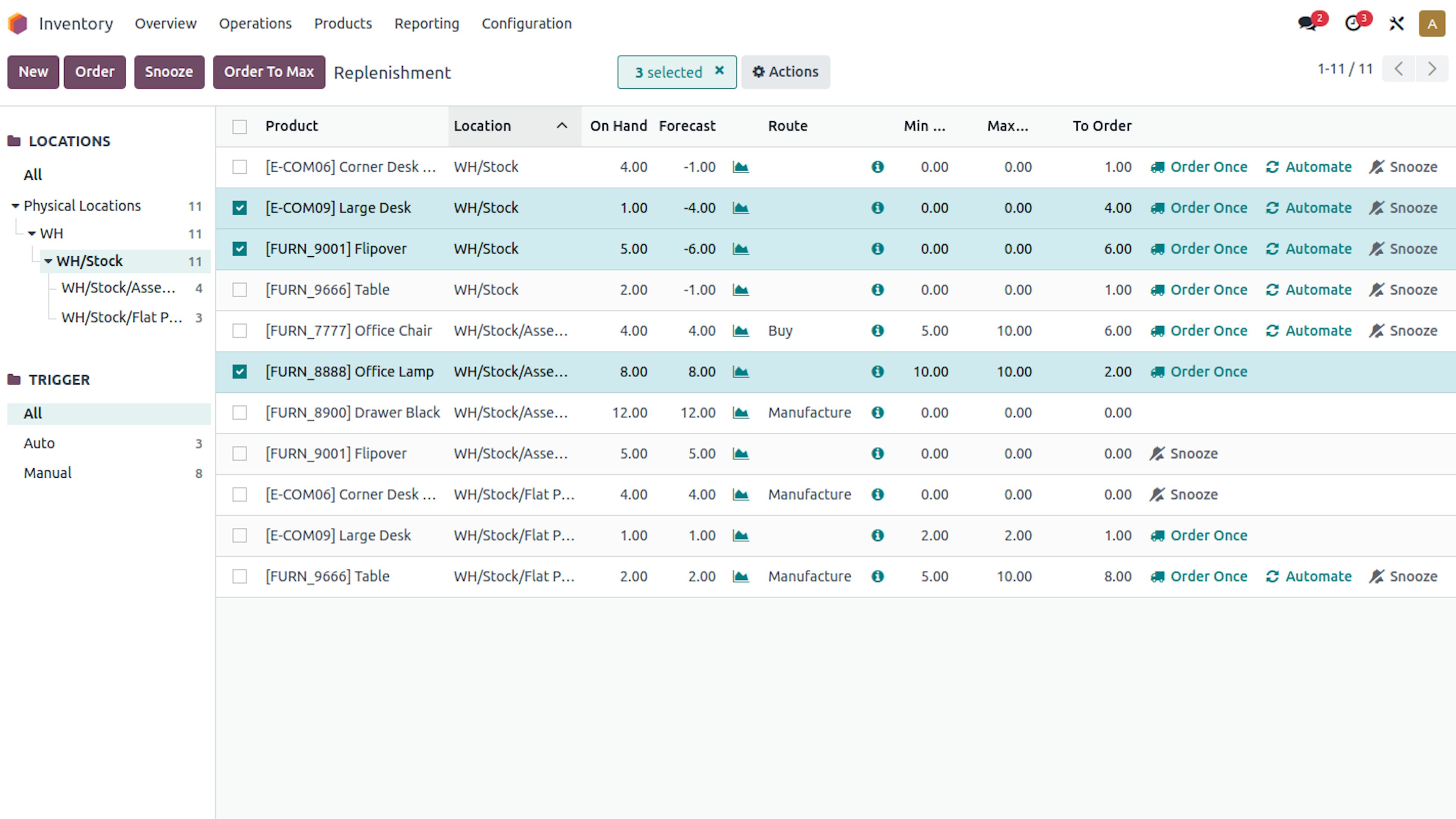
Success Stories: Well-Known Companies Using Odoo
Many well-known companies have successfully implemented Odoo. Some international examples include:
Toyota (Tunisia): Use of Odoo in after-sales and service processes.
Danone: sales and distribution management in specific countries.
Hyundai: Automation of internal processes at dealerships.
Parques Reunidos: Internal Operations Management.
Thinkific, Alta Motors, Trivago, and hundreds of tech startups.
In the Hispanic world, there are also hundreds of success stories in the industrial, logistics, and commercial sectors.
The key in these cases is proper implementation by certified partners such as Dynapps, who tailor the ERP system to the specific needs of the business.
Why is Odoo a popular choice compared to other ERPs?
Compared to traditional solutions such as SAP, Microsoft Dynamics, or NetSuite, Odoo offers clear advantages:
Significantly lower licensing costs.
Greater flexibility in customization.
Shorter implementation time.
An active global community that is constantly improving.
Modern and intuitive interface.
Furthermore, because it is modular and open-source software, the return on investment (ROI) is achieved more quickly, especially for small and medium-sized businesses and growing companies.
Is Odoo right for your business?
How to Tell If Odoo Is a Good Fit for Your Business Model
Odoo can be adapted to:
Companies with multiple disorganized processes.
Businesses that use multiple disconnected tools.
Organizations that need to scale up without losing control.
Companies looking to automate sales, purchasing, accounting, HR, etc.
If you're at that point, Odoo is probably a good solution.
Services and partners that help you implement it
To ensure a successful Odoo implementation, it’s best to work with an official partner like Dynapps. Our team of experts can help you:
Define processes and requirements.
Customize modules.
Migrate data.
Conclusion
Thousands of companies around the world already use Odoo as their central ERP system to manage their operations. From startups to large corporations, Odoo offers a unique combination of flexibility, scalability, and efficiency, making it one of the most popular and accessible solutions on the market.
If you're considering implementing an ERP system or upgrading your current one, Odoo could be the tool that marks a turning point for your business. And with the help of Dynapps, an Odoo Gold Partner, you can ensure a professional implementation that's tailored to your processes and ready to grow with you.
Discover what Odoo can do for your business.
An initial meeting to see if we're a good fit, followed by a demonstration tailored to your processes.
More posts like this
8-minute read
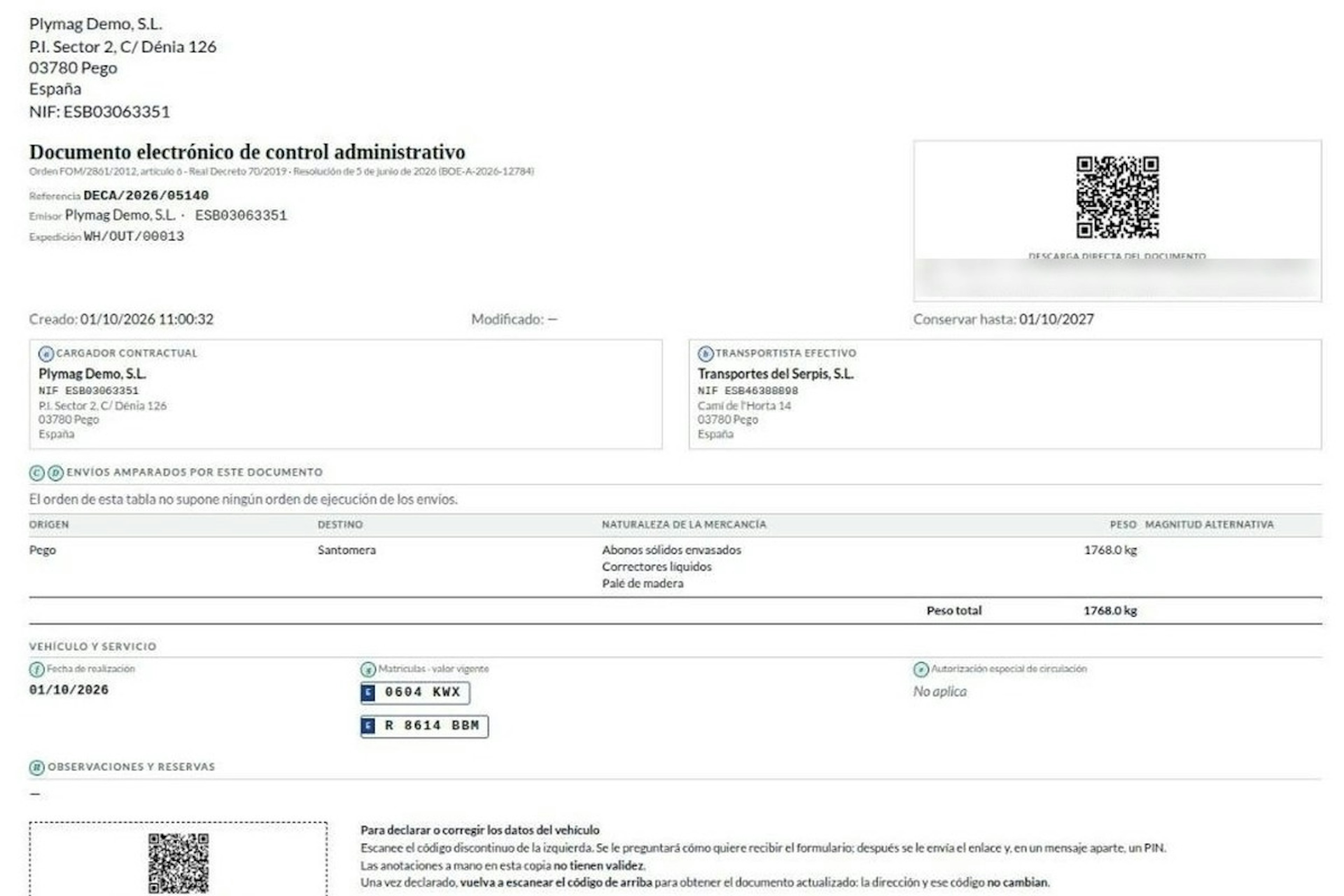
How the DeCA works in Odoo when the truck changes on the road: QR, secure link and PIN.
A breakdown, a different semi-trailer, a reservation about the load: this is how the DeCA is amended in Odoo during transport, with two QR codes, a link only the carrier receives and a six-digit PIN.
8-minute read
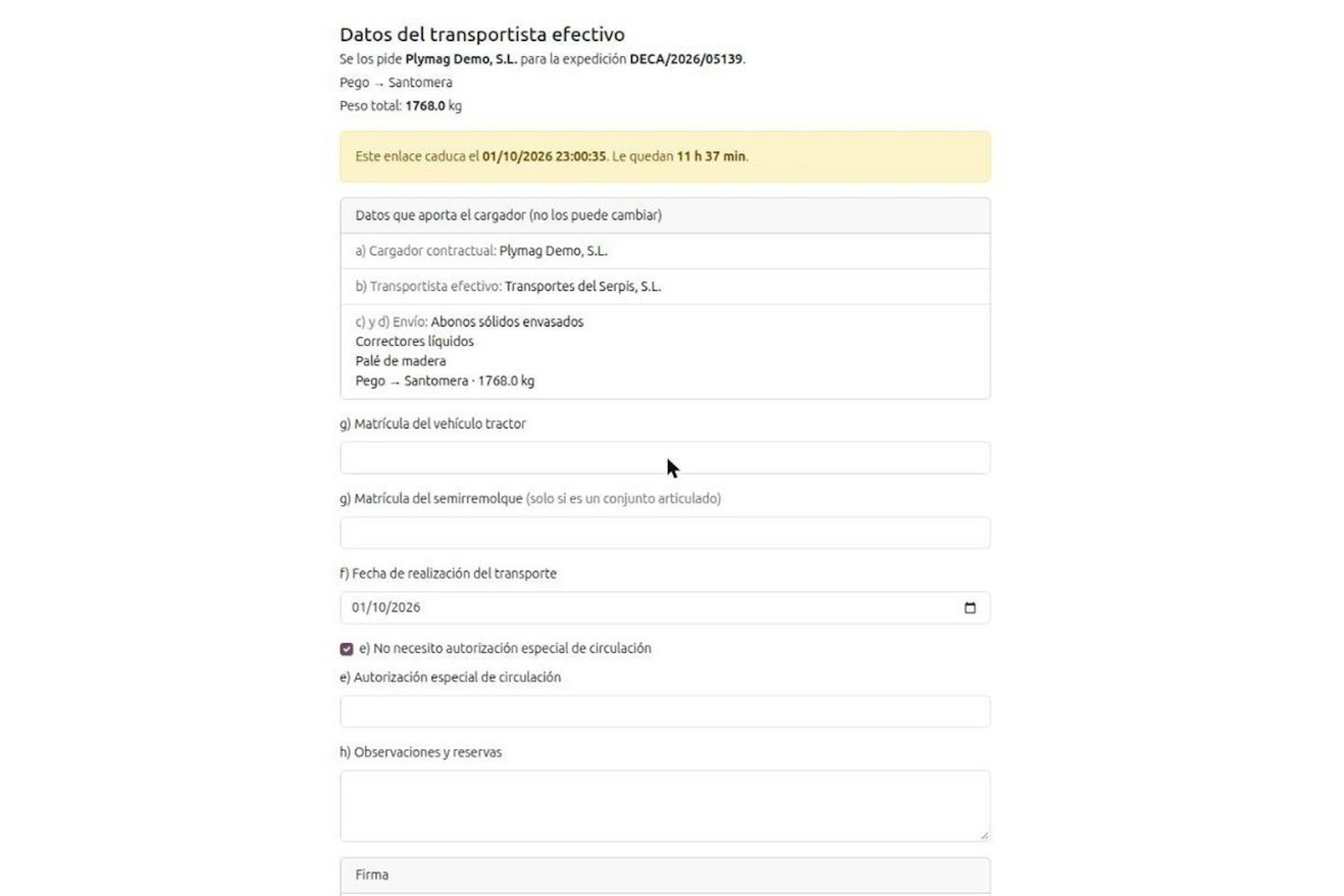
DeCA for transport companies with Odoo: you supply your data by link and issue it when you subcontract.
As the actual carrier, the DeCA binds you, but you will usually supply the special authorisation, date and plates through the link your client's Odoo sends you. When you subcontract, you will normally issue it from your own Odoo.
13-minute read
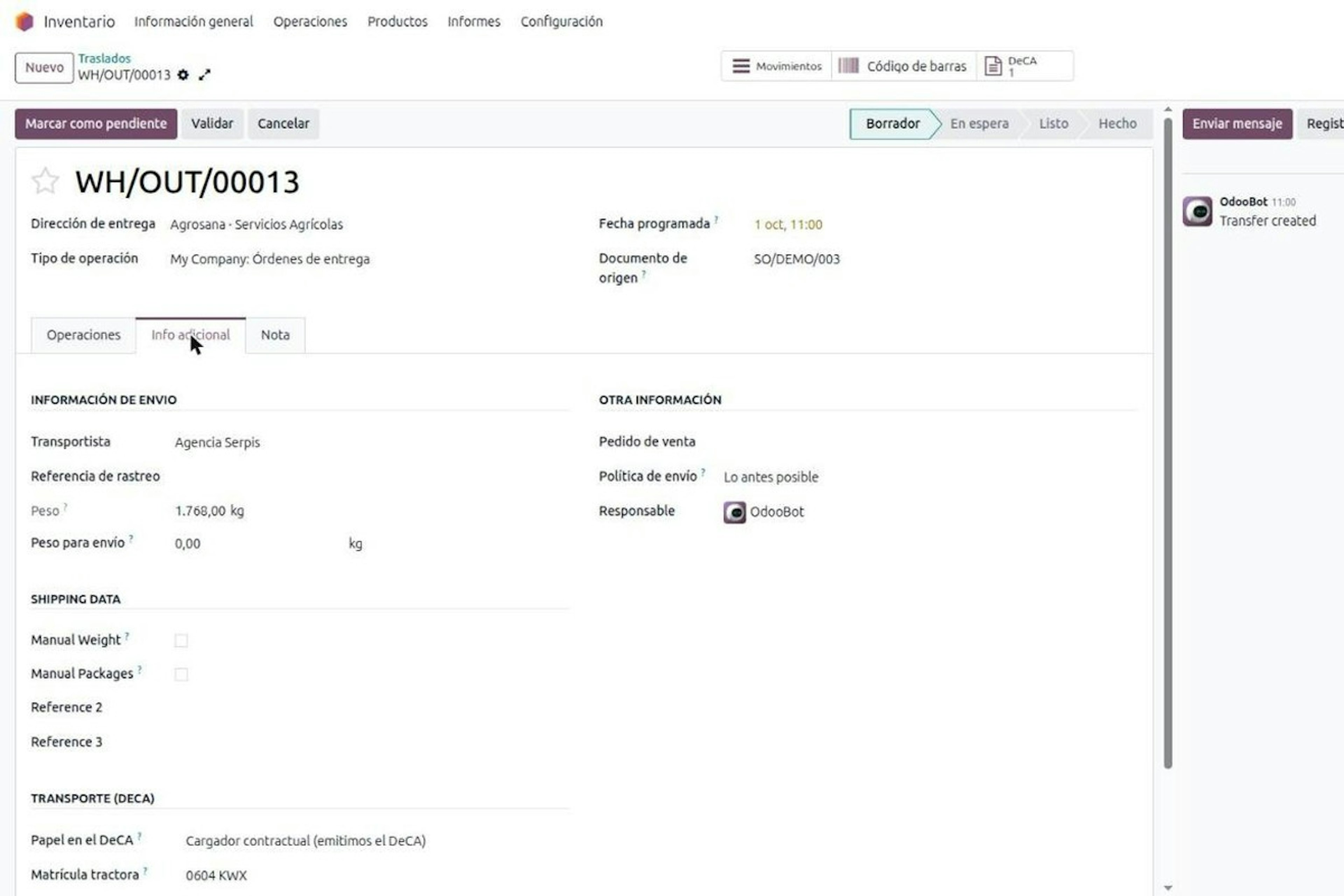
DeCA in Odoo: the transport control document, issued from the delivery order.
The DeCA is mandatory from 5 October 2026. If you run Odoo, you issue it from the delivery order with no separate tool, and the carrier adds the plate from their phone.
8-minute read
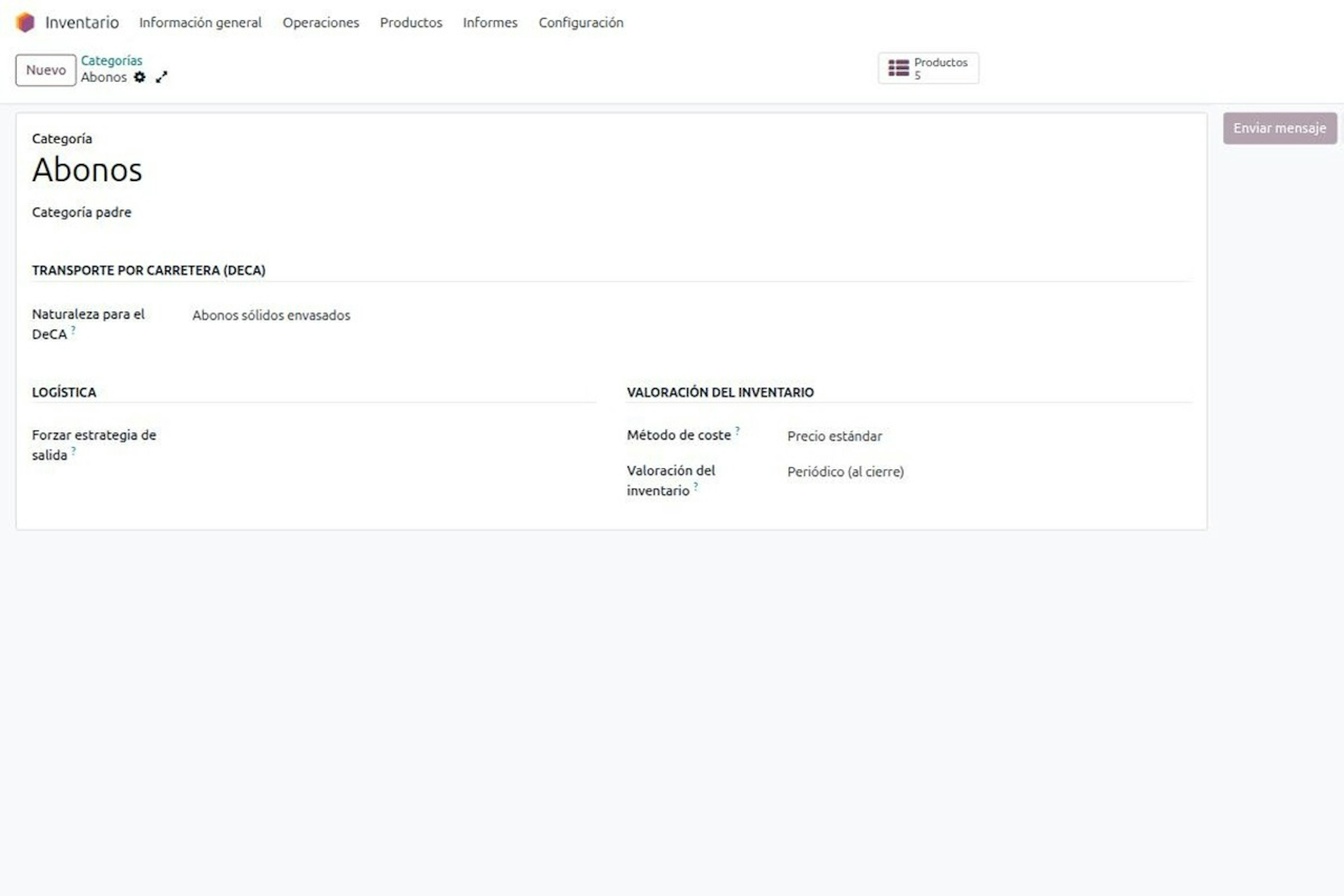
DeCA in Odoo for distribution companies: comply even without trucks.
If you distribute with Odoo and contract the transport, the DeCA binds you even if you own no truck, and you will usually be the one issuing it. What data you supply, why it is already on your delivery order and what daily work looks like.
8-minute read
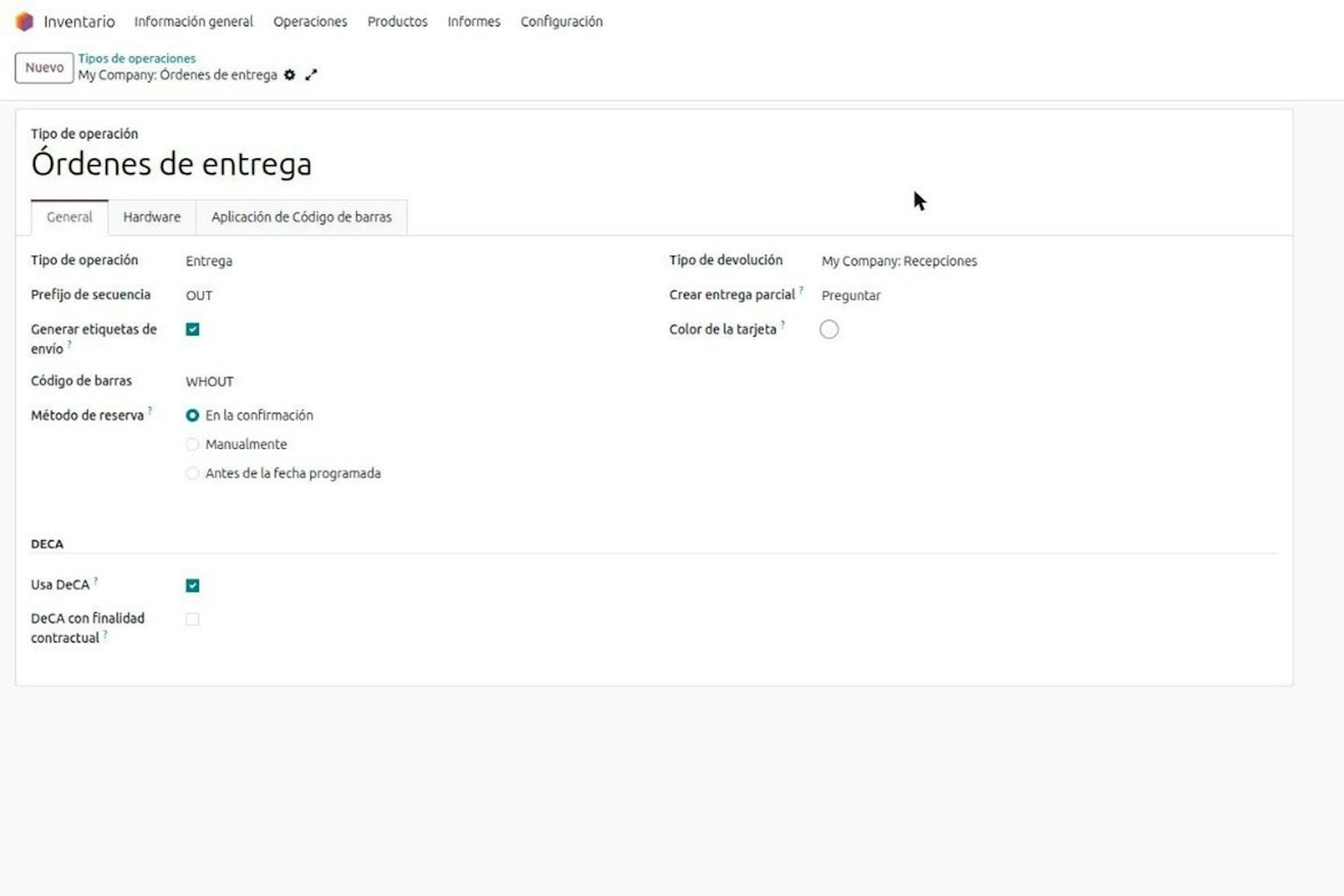
Who must issue the DeCA: both parties, and in Odoo you decide it on each delivery order.
The DeCA binds both the contractual shipper and the actual carrier, even if you own no trucks. Five questions to find out which one you are and how it shows on each Odoo delivery order.

Odoo Partner in Barcelona
Odoo Partner in Barcelona
Odoo Implementation, Consulting, and Support for Businesses in Barcelona

Odoo Partner in Madrid
Odoo Partner in Madrid
Odoo Implementation, Consulting, and Support for Companies in Madrid

Odoo Partner in Alicante
Odoo Partner in Murcia
Odoo Implementation, Consulting, and Support for Businesses in Murcia

Odoo Partner in Murcia
Odoo Partner in Murcia
Odoo Implementation, Consulting, and Support for Businesses in Murcia

Odoo Consultants
Odoo Consultants
At Dynapps, we’ve been working as Odoo consultants in Spain since before we wrote the first line of configuration code: we understand your business, prioritize what truly adds value, and only then do we design the solution.